Regional Specialties You Need to Try in France
Take a tour of French gastronomy with this comprehensive list of dishes and specialties from every region in France! With the recipes, too.
On this page
The North of France: Specialties from the Hauts de France regionThe Great East: Specialties from Alsace, Champagne-Ardennes and LorraineSpecialties from Bourgogne – Franche-ComtéNext to the Channel: Specialties from Normandy RegionBetween land and sea: specialties from BrittanyPays de la Loire: France’s gardenSpecialties from the Capital: Recipes from Ile-De-FranceSouth West, Specialties from New Aquitaine – Recipes from Aquitaine Poitou-Charentes and LimousinHalf French, Half Spanish: Recipes from the Basque CountryIn the Center of France – Specialties from Centre-Val de LoireA taste of the South: Specialties from Occitanie – Midi-Pyrenees and Languedoc RoussillonSpecialties from the Alps mountains: recipes from Auvergne – Rhône-Alpes region:Specialties from the Land of Cicadas: Recipes from Provence-Alpes Côte D’AzurCorsica Specialties: Recipes from the Island of BeautyFrench overseas specialties: recipes from France away from FranceOther French SpecialtiesHere are some FAQs about Regional French FoodFrance has so many types of cheese, wine, and specialties from all over the French regions that it’s hard to keep up!
Where do you go to try the ratatouille… or the famous frog legs, if you’re feeling adventurous? Don’t fret, I prepared a culinary Tour de France for you to enjoy. I even added the recipes with the brand new region names plus surprises for you to try!
Let’s kick off the list with dishes from the North of France.
The North of France: Specialties from the Hauts de France region
The former Nord-Pas-de-Calais and Picardie regions now form Hauts-de-France, which borders Belgium. The United Kingdom is not very far away, so their cuisine is heavily influenced by this melting pot of flavors. So it’s both sugary and savory here… and everything is cooked in a big pot like in Germany!
Northern cuisine is like its inhabitants: generous and heart-warming. Their specialties are:
- beers (of course)
- the Andouille de Cambrai (it’s a sausage made of chitterlings)
- Herring and Potatoes
- Watercress Soup
- Smoked Garlic from Arleux
- and the Maroilles cheese (warning: not for the faint of heart!)
Specialty recipe: Sailor Style Mussels : Moules marinières
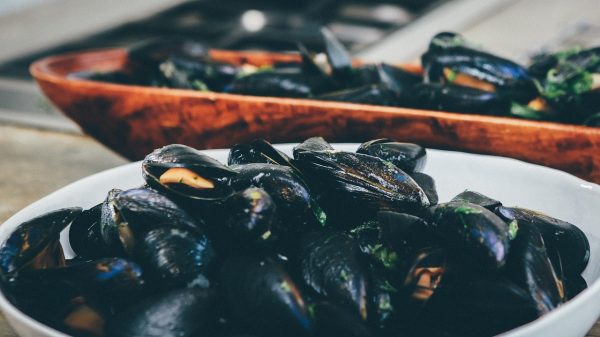
This dish is all about freshly picked mussels cooked with white wine, herbs and parsley. The recipe seems to come from Belgium, but the Bretons argue they were the first to cook them! The key to this recipe is to take really really fresh mussels, almost straight from the sea, and there are endless variations of this recipe if you’re fond of mussels.
The Great East: Specialties from Alsace, Champagne-Ardennes and Lorraine
Grand Est lies east of Hauts-de-France and includes Alsace, Champagne-Ardenne and Lorraine. It borders Belgium, Luxembourg, Germany and Switzerland. Therefore the gastronomy is influenced by the rich German cuisine and really keeps you up through the day in the colder continental climate.
Their specialties are
- Lard
- Cream
- red cabbage
- Mushrooms
- Alsace charcuterie (prepared pork products, including cured, smoked and cooked meats)
- munster cheese
- Alsace white wines
- grey wines from Lorraine
- and beer
If you want to end on a sugary note you can pick up a quetsche plum tart, bergamotes from Nancy, dragées from Verdun, cherries from Metz, Boulay macaroons, Commercy madeleines and the pink biscuit from Reims(exceptional in the sense that it still holds even dipped in Champagne…), cinnamon, or a kouglof/kugelhof! There are two different spellings according to who you’re talking to.
Specialty recipe: Quiche lorraine and Choucroute
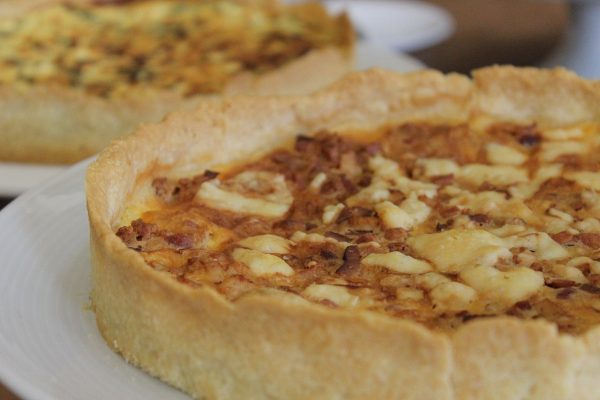
The Quiche Lorraine is a pie made with fresh cream, milk, eggs, nutmeg and grilled bacon. These last ingredients give it a smoky taste. It is so much appreciated everywhere in France that you can find it pretty much everywhere in the country–whether in its traditional versions or in a more modern version with mushrooms, leeks, and chicken.
If you are in a Lorraine restaurant, you can also taste Choucroute, a dish made of fermented cabbage and regional charcuterie but if you make it yourself, you’ll have to open the windows after!
Specialties from Bourgogne – Franche-Comté
Burgundy-Franche-Comté is in eastern France, around Dijon (famous for its spicy mustard) and Besançon; Lyon is farther south, in Auvergne-Rhône-Alpes. Between the Christmas tree forests and the mountain villages from Franche-Comté and the world-famous wines from Bourgogne (Burgundy), Burgundy is where La Varenne, author of the influential 1651 cookbook Le Cuisinier françois (The French Cook), was born.
Burgundy people like their food spicy, with spicy mustard and smoked lard. The sauces are usually added with onions and are added to stews or ragoûts in French. Vegetables are usually cooked with cream, and where would Burgundy gastronomy be without wine (like Armand Rousseau, Dugat-Py or Romanée-Conti from that region)?
Their specialties are:
- cheeses like Comté, Mont D’Or and Morbier (also not for the faint of heart!)
- apples and mushrooms
- yellow wines and kirsch (a cherry spirit)
- Mustard
- Bacon
- Bresse poultry
- Ham
- Charolais beef
- ..and snails!
Specialty recipe: Burgundy snails and Beef bourguignon
Snail is one of the few dishes French people get odd looks about. The unique snail recipe with parsley butter is commonly called “escargots à la bourguignonne”. They are presented in their shells and eaten with a small “snail fork” or a toothpick.
There is actually a nursery rhyme that every kid in France knows. It goes “Burgundy snail, show me your horns, tell me if tomorrow is going to be sunny!”
Boeuf bourguignon takes its name from Burgundy and traditionally combines beef with red Burgundy wine; Charolais beef and Côte de Nuits or Côte de Beaune wines are regional examples, rather than requirements for every version. Before being a Sunday dish everywhere in France, beef bourguignon was a favorite of peasants during special holidays. Its slow cooking is done in a stew pan and is accompanied by onions, garlic, bacon and a bouquet garni.
Next to the Channel: Specialties from Normandy Region
Normandy lies to the east and northeast of Brittany, and is the region of milk and apples. It’s one of the regions that can provide specialties from appetizers to dessert, without forgetting the cider!
The specialties will make your head spin:
- Sole Meunière, sole fish cooked in butter and served with browned butter, lemon and parsley
- Blanquette de veau (veal stew in a white sauce with onions and mushrooms)
- The classic Pot-au-Feu, and of course…
- the Apple tart!
Other specialties include cider vinegar, seafood (mussels, oysters and the Seine bay scallops), mushrooms, apples, butter and crème fraiche. And if you can’t remember all of them, the pop band Stone and Charden even made a song about it!
Specialty recipe: The Pot-au-Feu, alongside the distinct Normandy potée
An excellent family meal for long winter nights, the Pot-au-Feu is, like the name suggests, a very slowly cooked meat dish (you’ve got to let it simmer for 4 hours and a half!) cooked in a pot.
This has to be the French dish that led to the biggest number of variations, having been featured in many different regions. It’s usually composed of a piece of meat cooked slowly, bone marrow, beef tail, and various vegetables and spices. The very important part is to add a bouquet garni to the mix, made with parsley, thyme, bay leaf, garlic and black pepper grains.
Between land and sea: specialties from Brittany
You can visit Brittany from harbor to harbor and from island to island along the salty coasts. It’s famous today for its standing stones, the menhirs and dolmens in Carnac, the Brocéliande forest where the mythical King Arthur used to roam. The cuisine is also all about cooking with fresh produce and bounties from the sea.
Their specialties are:
- buckwheat crepes
- seafood (Lobster, Mont Saint Michel Bay Mussel, Côtes d’Armor scallops),
- artichoke Camus
- Cauliflower
- Plougastel strawberries
- churned butter (always salty for Bretons!)
- Cornouaille cider
- chouchen.
Specialty recipe: Buckwheat Crepes
My family has a very old family recipe for crepes that dates back centuries. The secret for delicious sugary crepes is to pick out great ingredients. To avoid lumps, add the milk very slowly and mix energetically—you’ll know that the dough has the right consistency when it coats your finger just right. My grandma’s secret is to add some alcohol, like rum, cognac, Grand Marnier or Calvados: some alcohol evaporates in the pan, though some can remain, and it gives the crepes an amazing flavor.
Pays de la Loire: France’s garden
Gastronomy in Pays-de-Loire reflects its geography, between the ancient marine harbors and the heart of the regions. It has Guérande and its “white gold”, the Lu Petit Beurre from Nantes, Sarthe and its rillettes and poultry from Loué.
Therefore many French specialties like Lapin aux pruneaux are associated with the region. The Pressed Duck or Canard au Sang (literally “bloody duck”), described below, is instead associated with Rouen in Normandy and the Tour d’Argent in Paris. Their specialties are:
- Buckwheat
- Guérande salt (Oléron island salt comes from Nouvelle-Aquitaine)
- Noirmoutier potato and butter
- Pont-l’Évêque cheese (a Normandy specialty)
- cider
Specialty recipe: Canard au Sang or Pressed Duck Tour d’Argent Style
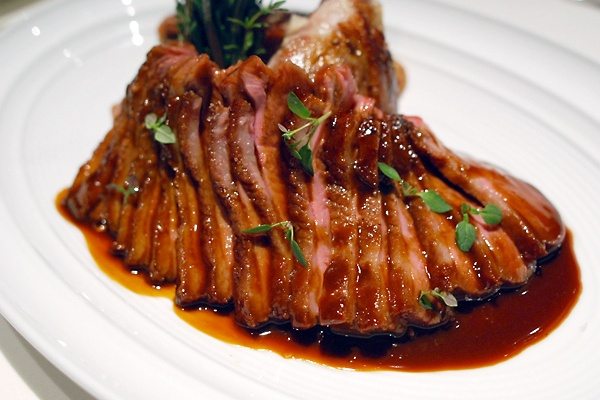
It’s such a classic but dramatic dish to make and you can’t really make it at home (since you crush the duck’s carcass into a press) but it’s an experience you have to try at least once in your life. The Pressed Duck recipe is actually a specialty of the historic Paris restaurant, the Tour d’Argent:
Specialties from the Capital: Recipes from Ile-De-France
The Parisian region is not only about Paris, there is also the Versailles castle, the Marne banks and their guinguettes, the races in nearby Chantilly, in Hauts-de-France, Provins and its medieval city.
Gastronomy-wise a lot of the most famous chefs all gather round in the Paris region, and the cuisine is influenced by all those French people coming to the big city. Their specialties are:
- Faro apple and Montmorency cherry
- Meaux mustard
- Paris ham and mushroom
- Houdan poultry
- Méréville watercress
- Brie cheese
- Grand Marnier orange-and-cognac liqueur (historically associated with Neauphle-le-Château)
- Parisian bread: they actually have a “Best Paris Baguette” contest every year and it’s a huge deal
- To finish a meal you can eat a Paris-Brest or a Saint-Honoré.
Specialty recipe: Croque-Monsieur and Hachis Parmentier
It’s the King of hot sandwiches! As delicious as it is easy to make, the Croque-Monsieur, allegedly appeared for the first time in a Parisian bistro on boulevard des Capucines. It’s that simple, almost trivial composition of ham, Emmental cheese and sandwich bread that made that express snack at a cheap price such a hit. For the gourmets, you also have the version with a sunny side up egg on top called the Croque-Madame!
The Hachis Parmentier was named in honour of Antoine-Augustin Parmentier, who promoted the pomme de terre as a food crop in France. This dish first appeared in the bistros of the capital. It is composed of two layers: the first is minced meat to which the chef adds aromatics, the second layer is a homemade puree, with grated cheese on top.
South West, Specialties from New Aquitaine – Recipes from Aquitaine Poitou-Charentes and Limousin
The New Aquitaine Region forms a huge territory from La Rochelle all the way to Spain! Apart from its world reputation for the Bordeaux wine, this region is also famous for its foie gras, meat from Limousin, milk as well as seafood products.
Their specialities are the
- “Piment d’Espelette”
- Bayonne Ham
- Truffles
- walnuts and strawberries from Périgord
- Prunes from Agen
- Garonne Garlic
- White beans
- Petit-Gris snails
- Mussels and oysters from Marennes-Oléron
- leeks and potatoes from Ile de Ré, butter, Chabichou cheese, Cognac, purple mustard, red fruit, Périgord apple.
Specialty recipe: Poule au pot
Aquitaine is where King Henry the IVth was from: he is traditionally associated with the Poule au pot recipe. According to the famous story, he wanted “each of the inhabitants of his kingdom to be able to cook a Poule au Pot every Sunday”.
Half French, Half Spanish: Recipes from the Basque Country
The Basque Country is technically not a French region but its Northern part is in Nouvelle-Aquitaine (formerly Aquitaine). It’s famously known for its cuisine, thanks to its quality and refinement.
This region is one of the richest French territories in terms of gastronomy, with influences from both the Béarn and Gascon country on the northern side and Spanish influences (like the use of olive oil) on the southern side.
Their specialties are
- Basque toasts with peppers and dried ham
- a potato tortilla with Espelette pepper or a fish bread with peppers
- basquaise pizza with black olives
- soufflé with piquillos
- basquaise salad with cherry tomatoes and Bayonne ham
- cod with spinach in a green sauce
- a piperade of peppers and tomatoes
- Basque cake with cherries
- koka (a cold caramel flan)
- and so many, many more!
Specialty Recipe: Poulet Basquaise
If you had to choose only one from this region, it would have to be the Poulet Basquaise. The poultry is raised locally and these are specially rare breeds of chicken and duck in the Basque country. The Poulet Basquaise is a complete dish where the meat is tenderized and softened with a piperade, a sauce composed of Bayonne ham, peppers, tomatoes and Espelette pepper.
In the Center of France – Specialties from Centre-Val de Loire
The Center of France is all about pleasures for the eyes and also for the palate. It’s nicknamed “the country with the thousand ponds” and has also cereal plains, forests, lands to have cattle and the Loire banks where many fish swim.
The Orléans people are well known for having a strong appetite: they’re well known for liking both appetizers and desserts, and are made famous for their pies or patés en croûte.They also have something for the sweet tooth, not limited to the Tarte Tatin, like the forestines from Bourges, praslines from Montargis.
Their specialties are
- the Orléans vinegar
- Gâtinais saffron
- Game
- pumpkin
- Belle de Fontenay potato
- goat cheeses
- Berry and Touraine wines, and
- green lentils from Berry.
Specialty recipe: Tarte Tatin
The name comes from the Tatin Sisters (Stéphanie and Caroline) who had an Hôtel Tatin in Lamotte-Beuvron (still open today!): according to a popular origin story, it’s a perfect example of serendipity. The sisters had lots of hunters as clients, and one day on opening season, Stéphanie was overworked and put apples in the oven directly, forgetting the dough. Later, realizing her mistake, she added the dough on top of the preparation and served the upside-down pastry as such. It was very much appreciated by the hunters and that’s how we’ve got this caramelized delicious treat today!
A taste of the South: Specialties from Occitanie – Midi-Pyrenees and Languedoc Roussillon
The Occitanie region opens both to the Pyrénées and to the Mediterranean sea, and is known for its inhabitants’ love of good food. It has so many legendary recipes and specialties. The broader southwestern repertoire and other French classics include the garbure (ham and vegetable stew), Bayonne ham from neighbouring Nouvelle-Aquitaine, the salmis de palombe, numerous goat and cow cheeses, Irouléguy wine from the French Basque Country and Madiran wine, the pommes soufflées (fried puffed potatoes), and the world-famous sauce au beurre blanc, Béchamel and Béarnaise sauce.
With the ferias traditions and the Camargue country and its beautiful bulls, the Occitanie people surely know how to party!
Other specialties are:
- Garlic
- Persillade
- olives and olive oil
- Collioure anchovies
- Bouzigues oysters
- Camargue bull and rice
- Tomato
- Eggplant
- Tarbes beans
- Roquefort and Rocamadour cheese
- Orange
- Citrus
- Almond
- Orange flower specialties
- Languedoc-Roussillon and Cahors wines
- Armagnac.
Specialty recipe: Cassoulet and Gratin Dauphinois (a Dauphiné specialty from the Alpine region)
Cassoulet is not the lightest dish you’ll eat in France! Originally from Languedoc-Roussillon, the legend places the origins of the cassoulet in the city of Castelnaudary which was besieged by the English during the Hundred Years’ War.
According to the story, the hungry castle dwellers had gathered all the available food (white beans and different meats) to make a huge ragout or estofat, to reinvigorate the soldiers. They were able to beat the English and free the city. This is a legend rather than established food history. That legend comforted the nationalist sentiment and makes cassoulet a beacon of French values of courage and tenacity!
In the Dauphiné, around Grenoble and the Alps rather than Occitanie, another winter dish has become a mainstay: gratin dauphinois. An often-repeated historical account associates an early recorded serving with a July 1788 dinner for municipal officers in Gap; this does not establish that the dish was invented that day. The sliced potatoes are cooked in the oven with garlic, crème fraîche or milk and nutmeg. No cheese is added in the original recipe but it is so delicious that everyone likes to cook it in his own way.
Specialties from the Alps mountains: recipes from Auvergne – Rhône-Alpes region:
Auvergne is France’s “Green Lung” and has a typical rich and copious cuisine, despite its reputation. Auvergne people will serve you their Petit salé aux lentilles (that my grandma used to make even if I wasn’t a fan of lentils growing up) stuffed cabbage.
In the mountain region of the Alps, they stock up on cheese. Inspired by their Swiss neighbors, they have loads of cheese specialties.
But it’s also the Lyon region, one of the huge gastronomic cities in France with its traditional charcuteries, and its Beaujolais Nouveau wine you can appreciate with local specialties in the many bouchons lyonnais. There is even a party every year, everywhere in France, to celebrate the New Beaujolais coming out!
Their specialties are:
- Beef (from Salers or Aubrac),
- Pork
- Lard and ham
- Bourbonnais chicken
- Auvergne cheese (like Cantal, bleu d’Auvergne and Saint Nectaire)
- Cabbage,
- Dessert fruit
- Côte d’Auvergne wine.
Specialty recipe: Raclette and Fondue Savoyarde
The Savoyards regularly consume raclettes and fondues. At home, guests often melt raclette cheese in small pans and scrape it onto their plates; quail eggs can be an optional addition. The name comes from racler, “to scrape”, referring to the traditional method of scraping melted cheese from a heated wheel. Charcuterie and boiled potatoes are served next to the melted golden cheese.
The Fondue Savoyarde, is a large container filled with a mixture of 3 cheeses and white wine. The guests then dip pieces of bread on long forks into the melted cheese. Tradition has it that the one who makes his piece of bread fall has to pay a forfeit, so keep your eyes on the prize!
Specialties from the Land of Cicadas: Recipes from Provence-Alpes Côte D’Azur
The gourmet “PACA” will delight you with savors to enjoy in the olive trees shade, away from the Mistral and Tramontane winds.
Over there, everything smells good: the génépi, from which you make an excellent liqueur, the fruits and vegetables from the open air markets, or the aromatic herbs like thyme, rosemary and completing dishes made with Camargue bull or Mérinos sheep.
We’re in the country of Escoffier, “King of cooks and Cook for kings” who invented the Pêche melba dessert (a personal favorite and so easy to make!). You can start with an anchoïade, carry on with a baked pasta gratin with spinach or a Niçoise salad if it’s too hot.
Their specialties are basil, garlic, olive and olive oil, aromatic plants, anchovies, capers, tomato, fruit, and Provence wines.
Specialty recipe: Ratatouille and Bouillabaisse
In Provence, it’s a granny’s dish par excellence, and indeed my Nice grandmother makes the best ratatouille. It is so delicious that today most restaurants offer it as an accompaniment to fish or meat… And it’s of course world-famous for its Pixar fame!
When you think about the fully-bodied Bouillabaisse soup, you immediately think about the South of France, beautiful weather and eating by the sea, and more precisely to Marseille where it’s a specialty. Marseille was founded around 600 BCE. The dish’s Provençal name refers to boiling and then lowering the heat; stories linking its origin directly to the city’s foundation are traditional accounts.
This dish is made with varied fish, tomatoes and southern herbs and spices; some versions add shellfish. Rouille or aïoli is served alongside it with garlicky bread or croutons, rather than mustard and egg yolks being standard ingredients of the fish soup itself. It may also be served with potatoes. Traditionally the soup and fish are served separately. This sea dish is enjoyed best with a rosé wine from Provence, of course.
Corsica Specialties: Recipes from the Island of Beauty
Of course, you go to Corsica because of the superb beaches, the cute villages and the mountains…and of course, the gastronomy.
Their specialties are:
- Corsica charcuterie (like coppa and lonzu corsica sausage),
- figatelli (a sausage specialty that you can grill on the barbecue)
- an amazing olive oil, “oliu di Corsica”
- cheeses such as brocciu, made from sheep’s and/or goat’s whey with added milk,
- cakes like fiadone and brocciu donuts
- Canistrelli biscuits
- Jam
- Honey
- Corsica beers (Pietra and Colomba)
- chestnut flour
Corsica also grows wonderful fruits all year round: citrus in Winter, orchard fruit in Summer (peaches, apricots, plums), figs in Fall. This results in great jams that they make each and every month.
Specialty recipe : Corsican style Veau Sauté aux Olives (Sautéed Veal with olives)
Corsica has loads of fish dishes but also mountain ones. This veal dish uses the Corsican olives that are so typical of this sunny country. There is also the winter Figatellu lentils dish that’s perfect after a hike in the mountain to reinvigorate you !
French overseas specialties: recipes from France away from France
Talking about islands, France also has overseas departments and territories, historically often grouped under the term DOM-TOM. Between Guadeloupe, Martinique, Réunion, French Guiana and French Polynesia, there are so many occasions to taste some exotic dishes as well !
You can start a meal with a traditional Rum punch, the accras preceding the fish creole soup or the creole boudin. The specialties are cane sugar, spices and Cayenne pepper from French Guiana, Bourbon vanilla from Réunion, fish and seafood, creole fruit, and Rum, that can also be «arranged » by adding spices and fruit.
Specialties recipes : accras de morue and boudin créole recipe
These French overseas places have different histories and food traditions, from the Caribbean to South America, the Indian Ocean and the Pacific. French Guiana is on the South American mainland, rather than an island. Go and check their gastronomy for yourselves: influences from surrounding countries make their dishes very cosmopolitan… And spice and hot pepper often play a starring role!
Other French Specialties
So we’ve been exploring some dishes that are typical of each and every one of the French Regions. But some of the well-loved dishes plates that are served every day in French restaurants don’t really belong to any region in particular since they’ve become so incredibly popular.
So here are some honorable mentions that are standouts in French cuisine:
- Foie Gras, the world associates this specialty with France (although the geese and duck stuffing tradition dates back to antiquity). Best on a brioche bread with a little onion confit or fig jam.
- Cheese soufflé is quite complicated to realize (depending on the cooking time and the temperature of the oven). Try it only if you’re feeling brave!
- The true Tartar steak is cut with a knife, then spices and an egg are added. Served with chips, this is a good alternative to traditional steak-frites.
- Coq au Vin‘s origin is unsure, since Alsace, Burgundy, Champagne and Auvergne all claim it as their own. According to legend, the Arverne people besieged by the Romans sent a rooster, symbol of courage and determination, to the enemy to taunt him. Julius Caesar invited the Arverne chief to dinner and a cook was ordered to prepare the Gallic rooster in order to impress the Arverne chief! At the time, wine was a luxury product and symbol for abundance and power.
Blanquette de Veau is a veal dish simmered with cream, carrots and broth. It’s called like this because of the whitish color of the sauce and is made famous internationally thanks to Jean Dujardin’s line in the OSS 117 movie: “Comment est votre blanquette?”. The line became a memorable joke about this classic dish.
And finally, we couldn’t end that article without mentioning a dish that often frightens tourists in France: Frog Legs.
Usually fried with a little onion and garlic butter, à la provençale or fricasséed, they are the French elite’s meals served to guests since the XVIth century. France’s appetite for frog legs supports an international import trade, though the volume varies by year. Don’t worry, the taste is delicate and tastes like poultry while still remaining soft.
Here are some FAQs about Regional French Food
Does France have any regional food specialties?
France has many regions, and each region has their own culinary specialty. In our article, we outlined some of France’s must-try specialties from each region. Here are a few from our list: moules marinières from the Nord Pas-de-Calais and Picardie; beef bourguignon from Bourgogne-Franche-Comté; and gratin dauphinois from the Dauphiné in southeastern France, especially around Grenoble.
Please use our article as a guide for your cravings around France!
What is the difference between classical and regional French cookery?
Classical French cookery, also known as haute cuisine, is what we know as iconic Western fine dining. Haute cuisine is about elaborate dishes that have been presented as an art, and crafted down to the details like a science. Think of the movie Ratatouille— that’s haute cuisine.
But such fancy cookery isn’t something the average French person can afford. In fact, classical French cookery only makes up a small percentage of French cuisine. Regional French dishes are the majority of French cuisine, and the variety between regions, from Normandy to Corsica, make the regional specialties worth trying!
What are the most popular French specialties?
Some French dishes have become so popular that they no longer belong to any particular region; these specialties are served in several locales in France. You might be able to recognise a few: foie gras, coq au vin, and steak au poivre.
Fun fact: croissants have Viennese roots in the kipferl, but the modern flaky version developed in France. We still love them as a classic French pastry!
What is special about French cuisine?
What makes French cuisine famous, is largely due to the French attitude towards food. As with wine, and passion, the French appreciate food, and rather than rushing through a meal, they take their time at the dining table to socialise with loved ones while leisurely appreciating their food. The complex flavours, how the two elements of the meal complement each other, the whole gastronomic experience, it matters.
Not only in classical French cuisine, with the tastefully designed restaurant venues and ambiences, but also in regional specialties. Each region boasts their own unique style and trademarked flavour, almost in contrast with each other; each locale has their own basic ingredients, rules, and philosophies that speak in their dishes.