Famous French Bread Names and How to Avoid Mispronouncing them
France is world renowned for its food and wine culture. Therefore it should come as no surprise that they are arguably the best at bread too.
It’s important to know the different varieties of French breads available, and how to correctly pronounce their names. That way, you can blend in like a true local next time you’re at a French boulangerie. So keep reading if you’d like to sound like a true French bread connaisseur.
The Importance of Bread in France
The vast majority of French people eat bread every day, which adds up to tens of kilos of bread per person each year. Billions of baguettes are eaten every year in France alone! No one consumes bread quite like the French.
France takes its bread very seriously. In 1993, Le Décret Pain set specific standards for bread sold as pain de tradition française, including traditional baguettes. This category must not be frozen during production or contain additives; ordinary baguettes do not all have to meet these particular rules.
Bread is such an important part of French culture that the word copain, meaning ‘friend,’ comes from the Latin phrase cum pane, meaning ‘with bread.’ In other words, the person you share bread with is your friend. In France, there is even a Patron Saint for bread – St Honoré, who is celebrated every year on the 16th of May.
If you are yet to be convinced of the importance of bread to the French, maybe this will help you. Each year, the Grand Prix de la Baguette is held in Paris. In it, Parisian bakers compete for the title and prestige of the best boulanger of the year, with the honour of supplying the French President with bread for the year. It’s almost a national sport! Amazing, right!?
Now onto the bread!
The different types of bread and how to pronounce them in French
The written pronunciation guides below are approximate. In pain (/pɛ̃/), son (/sɔ̃/) and the final syllable of croissant (/kʁwasɑ̃/), the vowel is nasal: the final n is not pronounced as a separate consonant. Listen to the recordings for the French sounds.
As previously stated, there is a wide variety of bread in France. Most of the breads listed below are in fact traditional breads, however some are pastries, otherwise known as viennoiseries, and are often confused as bread.
La baguette
Pronunciation: la-buh-get
Arguably the most famous and quintessentially French bread there is. The baguette is a long, thin loaf of bread. It must have a tough, golden-brown crust and a soft, yet chewy inside. It should weigh approximately 250gm and be 65cm in length once baked. It gets its name from its baton-like shape.
La brioche
Pronunciation: la-bree-osh
A brioche is a sweet, fluffy enriched bread classified as a viennoiserie. It is made from leavened yeast dough with plenty of eggs and butter, unlike ordinary lean bread. This soft, golden bread is perfect for French Toast.
La boule de pain
Pronunciation: la-bool-de-pan
A Boule de Pain is a round bread, with a very similar taste and texture to the baguette. It has a crunchy crust and a soft, chewy inside. This bread is usually served with the main meals, breakfast, lunch, and dinner. It is also able to last a few days without becoming too hard or stale.
Le croissant
Pronunciation: le-krwa-son
Known across the world as the breakfast of choice for the French, people often mistake croissants for bread, as they are a yeast leavened dough, but they are in fact a viennoiserie. They are lighter, more airy, and have a higher fat content than bread. The dough is layered with butter. It is rolled and folded a number of times before baking, giving it the crispy, yet chewy layers we all know and love. Eat them for breakfast or at any time of the day as a snack.
La ficelle
Pronunciation: la-fee-sell
A ficelle, while similar looking to a baguette, is not the same thing. A ficelle is thinner, with a much crunchier outer crust and a soft center. The word itself literally means ‘string’ in English. They are often made with sourdough. This is a classy bread, usually eaten with an expensive or special meal.
La faluche
Pronunciation: la-fa-lu-shh
A faluche is a loaf of white bread. It is well known as a breakfast bread in France, often eaten with butter or jam, but in reality you can pair almost anything with this bread. It has an unusual circular shape, resembling a saucer.
La fougasse
Pronunciation: la-fu-gas
Fougasse has a lot in common with modern pizza and focaccia. It is a bread made with a variety of herbs and herb flavours, including sage, thyme, olive, rosemary and sun dried tomatoes. It can sometimes be served with cheese on top, as well as anchovies and bacon. This bread is best served warm.
Le pain à l’ail
Pronunciation: le-pan-a-lie
Pain à l’ail is a garlic bread. The amount of garlic used is entirely up to the person making it, as there are a variety of different recipes available to make this bread. The one thing all the recipes have in common is that you are definitely going to have garlic breath after eating this bread! This is a very popular bread that traditionally pairs well with any pasta dish.
Le pain brié
Pronunciation: le-pan-bre-ay
Pain Brié, while traditionally made with the same ingredients as bread, has a very different texture to most other breads. This bread is kneaded for much longer prior to baking than other breads, giving it a much denser texture. This makes le pain brié the perfect bread to dip into soups or sauces.
Le pain de campagne
Pronunciation: le-pan-de-cam-pan-ye
Pain de campagne is a rustic bread often made with sourdough, yeast, or a mixture of both. It has a hard crust, which is often scored, and a dense center. It most often comes as a round loaf. This is a great bread for lunch and dinner, and goes well with soups. It also works well as sandwich bread.
Le pain au chocolat
Pronunciation: le-pan-oh-sho-ko-la
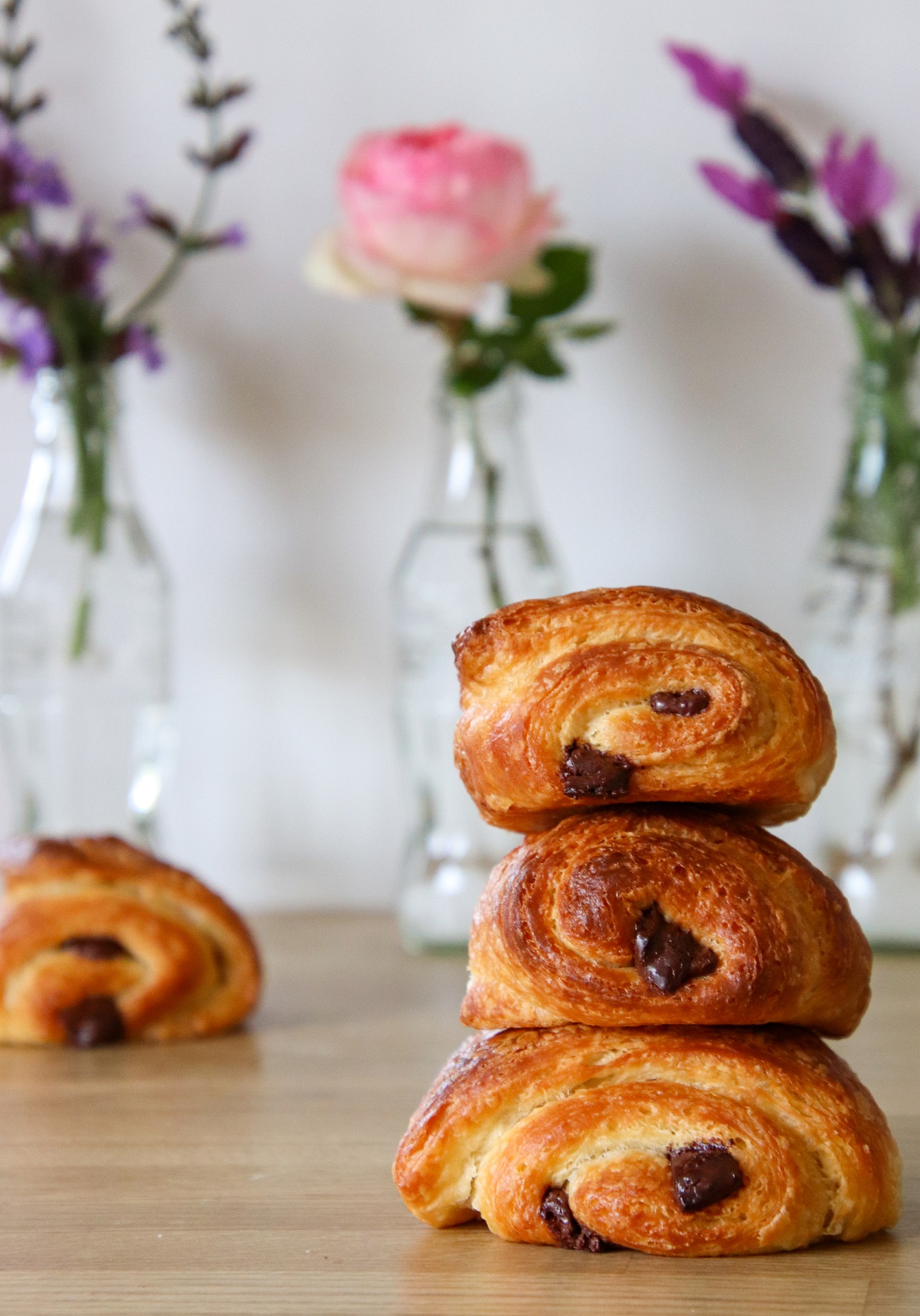
Pain au chocolat is another viennoiserie or pastry that is often confused as bread. It is a rectangular pastry made from yeast leavened dough with two pieces of dark chocolate in the center. It has a similar texture to the croissant. This makes a delicious breakfast or snack with coffee.
Le pain complet
Pronunciation: le-pan-kom-pleh
Pain complet is a whole wheat, or wholemeal bread. It is made from flour that has not had the outer layers of its grains removed. In other words, it’s brown bread, and is considered one of the healthiest types of bread.
Le pain couronne
Pronunciation: le-pan-koo-ron
This rather special looking bread is made in a circular shape and often resembles a wreath. Couronne refers to the shape: it can be ordinary bread or a sweet enriched version, depending on the recipe. Sweet versions are perfect for breakfast with a morning coffee.
Le cramique
Pronunciation: le-kra-meek
A cramique is a raisin bread. It has a similar taste and texture to the brioche, so it’s a sweet bread that has a soft and fluffy texture. This is a popular bread choice for breakfast. It is often served with butter or jam.
Le pain d’épices
Pronunciation: le-pan-day-pees
Pain d’épices is a bread made with a variety of different spices. It’s often compared to gingerbread, but isn’t quite the same thing. It is traditionally made with rye flour, honey, and spices such as aniseed, cloves, nutmeg and cinnamon. It is often sold as a loaf.
Le pain de mie
Pronunciation: le-pan-de-mi
Pain de mie is a soft, fine grained and thin crusted bread. It can be white or brown. It is best known as being similar to sandwich bread, although it is sweeter than most breads. It is mostly sold as a sliced and packaged loaf. It’s perfect for sandwiches or toast.
La miche
Pronunciation: la-mi-shh
A miche is a round loaf, often a large one. It can be made with different flours; whole wheat or rye versions have a darker colour and more fibre. The name describes the loaf’s shape rather than requiring a particular flour blend or sourdough recipe.
Le pain aux noix
Pronunciation: le-pan-oh-nwa
Pain aux noix is a loaf of bread made with walnuts; it is not necessarily whole grain. It can be a dark or golden color and is typically sold as a loaf. It can be eaten with either sweet or savoury spreads. It’s perhaps best paired with cheese and charcuterie.
Le pain de seigle
Pronunciation: le-pan-de-seg-luh
Pain de seigle is rye bread. It ranges in color from light to very dark, depending on the proportion of rye and wheat flour used. It is a denser bread than most and has a stronger flavour. It is often sold as a round loaf, but can come in a variety of shapes and sizes.
Le pain au son
Pronunciation: le-pan-oh-son
Pain au son is bread enriched with bran, which does not necessarily mean it is made entirely from whole-grain flour. It has a dark brown color due to the high amount of bran in it. This also gives it its distinct taste, as well as its much higher fibre content. This bread is well known to assist with better digestive health. It is typically sold in smaller loaves and best enjoyed with a healthy meal or soup.
We hope you enjoyed today’s journey into the world of French bread. Next time you step foot into a boulangerie, you’ll be ready to order your bread with the pronunciation of a true French bread connaisseur.