Weird Facts about the Eiffel Tower
You may be surprised at what you don’t know about the Eiffel Tower. There are many little-known facts and stories, some of which you can read here.
On this page
1. Did Spain miss out on a 400-billion-euro landmark?2. The Eiffel Tower was never meant to stay forever.3. The French thought that Hitler could use some exercise.4. Painting the Eiffel Tower isn’t light work.5. During the First World War, the Eiffel Tower had an important role.6. Every famous landmark needs a well-known nickname.7. This great symbol of France recognises the people who make France great.8. How many lightbulbs does it take to make the Eiffel Tower sparkle?9. You wouldn’t think of the Eiffel Tower as scrap metal, but someone once did10. If you love the Eiffel Tower so much, why don’t you marry it?11. Canada wanted a piece of the Eiffel Tower, too.A world-renowned landmark of France, the Eiffel Tower is commonly associated with being an architectural wonder and an icon to represent the city of love and light. The Eiffel Tower has a unique and fascinating history and has seen many changes and world events unfold around it since it was built in 1889. There are some things about the Eiffel Tower that are common, but there are also some lesser known facts about it. These unusual facts about the Eiffel Tower all contribute to its significance in the world today.
1. Did Spain miss out on a 400-billion-euro landmark?
An often-repeated story says Gustave Eiffel first offered his tower to Barcelona, which rejected it. Treat that story cautiously: the Tower’s official history describes a project conceived for the Paris World’s Fair of 1889. A 2012 report on a Monza and Brianza Chamber of Commerce study put the Eiffel Tower’s brand value at about 435 billion euros, compared with about 91 billion for the Colosseum and 71 billion for the Tower of London. Those were estimates of image and reputation, not current sale prices or money Spain demonstrably lost. That’s still an impressive amount of symbolic value!
2. The Eiffel Tower was never meant to stay forever.
It is hard to imagine Paris without the Eiffel Tower, but if everything had gone according to the original plan, the city would have lost its most recognisable landmark. The Eiffel Tower was built in 1889 for the Paris World’s Fair, with an initial concession lasting 20 years. Its scientific uses, especially wireless communications, helped secure its survival. The city renewed Eiffel’s concession in January 1910, before the First World War.
3. The French thought that Hitler could use some exercise.
On June 23, 1940, Hitler visited occupied Paris. The Anne Frank House’s historical account says the French had severed the Tower’s lift cables before the German invasion, preventing him from going up by lift. Whatever he thought about the exercise, he never went up. The joke about making him climb the stairs should not be mistaken for evidence of exactly what the workers or Hitler were thinking.
4. Painting the Eiffel Tower isn’t light work.
The Tower needs regular repainting to protect its iron from corrosion, as well as to keep it looking good in all those photographs. This maintenance involves a lot of work: the official repainting figures give about 60 tonnes of paint per campaign. Imagine the weight of roughly ten large elephants!
5. During the First World War, the Eiffel Tower had an important role.
During the First Battle of the Marne in 1914, the Tower’s radio station intercepted German military information that helped the French organise their counterattack. The Tower’s official scientific history explains that wireless communications had already helped save it from dismantling before the war.
6. Every famous landmark needs a well-known nickname.
The Eiffel Tower is nicknamed La Dame de fer, or “The Iron Lady”. It was also once used as a giant billboard: from 1925 to 1936, the car company Citroën had its name spelled out vertically in lights on the Tower.
7. This great symbol of France recognises the people who make France great.
As well as being an important icon in French history and culture, the Eiffel Tower also pays tribute to other renowned figures in France. There are 72 names of famous French scientists, engineers, and mathematicians engraved on the sides of the tower, just under the first platform.
8. How many lightbulbs does it take to make the Eiffel Tower sparkle?
The Tower sparkles thanks to 20,000 flashing bulbs, separate from its steady golden lighting. A lesser known fact is that the night lighting and sparkles are protected by copyright. You can take and share your personal photos of the lit-up Tower. SETE’s guidance says professional use requires authorisation and may involve a fee; contact the operator about a specific intended use.
9. You wouldn’t think of the Eiffel Tower as scrap metal, but someone once did
In 1925, a sly con artist named Victor Lustig pretended to be a government official selling the Eiffel Tower for scrap. Scrap dealer André Poisson believed him and paid, only to discover the sale was a scam. Embarrassed, Poisson did not press charges, and Lustig fled to Austria. Lustig tried again later, but the second attempt failed. The Tower itself was never legitimately sold for scrap.
10. If you love the Eiffel Tower so much, why don’t you marry it?
Well, someone held a symbolic commitment ceremony with it! American Erika LaBrie became known as Erika Eiffel after a ceremony in 2007. In her 2009 interview with ABC News, she described her attachment to the monument and her name change. This was a personal commitment, not a legally recognised marriage. She also founded OS Internationale, an organisation for people who form relationships with inanimate objects. Hopefully she doesn’t get jealous when her life partner features in thousands of photographs with other people.
11. Canada wanted a piece of the Eiffel Tower, too.
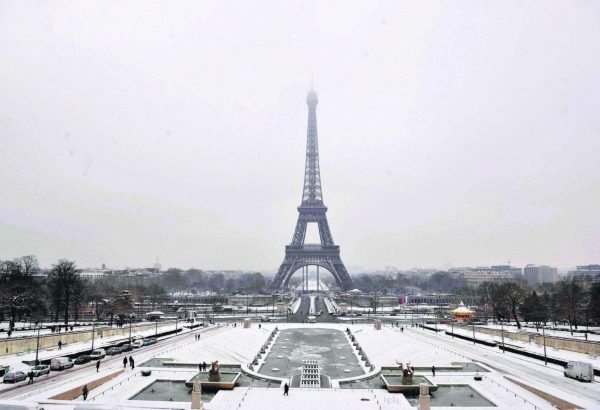
Montreal’s mayor, Jean Drapeau, wanted to bring the Eiffel Tower to Canada for Expo 67. The operator’s historical account says an official request reached France and the city of Paris, but that was as far as it went. The plan never progressed into an actual move, and the Tower stayed in Paris.