The 15 Most Interesting Museums In Paris
Discover 15 great museums to add to your next Parisian adventure. Some of the museums will surprise you!
On this page
1. The Louvre2. Le Centre Pompidou3. Musée d’Orsay4. Petit Palais5. Musée du Quai Branly6. Musée Carnavalet (Museum of Paris History)7. Musée Rodin8. Musée des égouts de Paris (Paris Sewer Museum)9. Musée d’Art Moderne de la Ville de Paris10. Musée National du Moyen Âge / Musée Cluny11. Musée des Arts et Métiers12. Musée de l’Armée13. Musée du Vin (Paris Wine Museum)14. Musée de la Contrefaçon (Museum of Counterfeiting)15. Musée des Arts ForainsLooking for a great museum or two to add to your next Parisian adventure? Or do you simply want to know more about the popular French museums that constantly appear in conversations?
Here is my list of 15 of the most interesting museums in Paris. But a little disclaimer—this list is totally subjective, of course!
1. The Louvre
One of the most visited museums in the world, the Louvre is also one of the largest, most diverse, and (perhaps) the most interesting museums in the world. It is renowned worldwide and a ‘must-see’ for all first-time visitors to the capital. A former fortress and palace of the kings of France, it was turned into a museum after the revolution.
The Louvre displays around 35,000 paintings, sculptures, and other priceless works of art from all over the world. Its collections are organised into nine departments: Near Eastern Antiquities; Egyptian Antiquities; Greek, Etruscan and Roman Antiquities; Byzantine and Eastern Christian Art; Islamic Art; Paintings; Sculptures; Decorative Arts; and Prints and Drawings. They include works from ancient civilisations as well as Western art from the Middle Ages to 1848. The ninth department, Byzantine and Eastern Christian Art, is an institutional department; this does not mean nine separate gallery areas are already open to visitors.
You enter its premises via I. M. Pei’s pyramid, its main entrance, which will give you the first inkling of the museum’s disparate elements. The only drawback to visiting this museum is you cannot finish exploring the whole Louvre in just one day.
Main attractions: “Venus de Milo,” “Winged Victory of Samothrace,” and Leonardo da Vinci’s “Mona Lisa.”
Opening hours: every day except Tuesday (9 A.M. – 6 P.M., with late openings some evenings; check the official website)
2. Le Centre Pompidou
A vibrant and colourful museum, the Centre Pompidou is another of the best-known attractions in Paris. It offers some of the most distinctive architecture in the world, with its twisting exposed pipes, and the diverse air ducts moulding its whole structure.
Before the closure, it housed many forms of modern and contemporary artwork, from sculptures, paintings, books, cinema, and video, to occasional theatrical performances, dance numbers, and music concerts. This museum is great for people who love the unconventional. Note: the Centre Pompidou closed in September 2025 for a major renovation and is scheduled to reopen in 2030.
Main attractions: Stravinsky fountain, Masterpieces of Picasso, the building itself…
Address: Place Georges-Pompidou, 75004 Paris
Opening hours: closed for renovation until 2030
3. Musée d’Orsay
Musée d’Orsay is best known for its extensive and opulent collection of impressionist and post-impressionist masterpieces by well-known painters that include Monet, Manet, Renoir, Cézanne, Sisley, and Van Gogh. It houses thousands of works of art, mainly dating from 1848 to 1914. You will find paintings, sculptures, furniture and photographs, but it cannot be doubted that the building itself will be the very first work of art that one will see.
Main attractions: Bartholdi’s Liberté (a smaller version of the Statue of Liberty) and Gauguin’s painting on glass, Motifs floraux et végétaux
Visitor entrance: Esplanade Valéry Giscard d’Estaing, 75007 Paris
Opening hours: T, W, F, S and Su (9.30 A.M. – 6 P.M.); Th (9.30 A.M. – 9.45 P.M.)
4. Petit Palais
A cute but lavish architectural gem by architect Charles Girault, the Petit Palais is home to outstanding sculptures, paintings, tapestries and decorative arts, including works by major French artists. Like its neighbouring museum, the Grand Palais, the Petit Palais was built for the 1900 Universal Exposition. Its architecture is very appealing and evokes the Paris of 1900.
Built in the Beaux-Arts style, the Petit Palais is designed to honor the City of Paris, and, in particular, the benefits and contributions of art in the West.
Address: Avenue Winston Churchill, 75008 Paris
Opening hours: T – Su (10 A.M. – 6 P.M.)
5. Musée du Quai Branly
Opened in 2006, Musée du Quai Branly was created to showcase Indigenous art from different continents. You can walk through ancient civilisations and encounter the indigenous way of life of non-Western countries in Musée du Quai Branly.
Dedicated to preserving and showcasing the beauty of indigenous art, cultures, and civilisations all around the world, from Africa, to Asia, Oceania and the Americas, this innovative cultural institution has a simple goal: to open Paris to Non-Western culture. Truly a great place for families and students who want to be educated about non-Western societies.
Address: 37 Quai Branly, 75007 Paris, France
Opening hours: Tuesday to Sunday (10:30 A.M. – 7 P.M.); Thursday until 10 P.M. Special Monday openings during the short school holidays; check the official website
6. Musée Carnavalet (Museum of Paris History)
Musée Carnavalet will walk you through the history of Paris with its rich collections of medieval and Gallo-Roman archaeological objects, mementos from the French Revolution, and fragments from each period in the life of Paris. The museum is also unique, as it occupies two mansions from the 16th and 17th centuries, making it quite distinct from other museums in Paris.
The two mansions are the Hôtel Carnavalet and the Hôtel Le Peletier de Saint-Fargeau. Musée Carnavalet is noticeably less crowded compared to other museums, allowing its visitors to savour more of the antique maps, historical artworks, letters, and the magnificent painted decorations by Charles Le Brun in the La Rivière salons.
Main attraction: Charles Le Brun’s La Rivière salon decorations and the Thermidor appeal bearing Robespierre’s interrupted signature
Visitor entrance: 23 rue Madame de Sévigné, 75003 Paris, France
Opening hours: T – Su ( 10 A.M. – 6 P.M.)
7. Musée Rodin
You probably know of The Thinker, right? It is the most famous masterpiece of Auguste Rodin and one of the many works displayed in the Hôtel Biron, where he established his Paris workshops in 1908. You will see a wealth of sculptures created by Rodin, including: The Great Balzac, the Burghers of Calais, and the Gates of Hell. The collections also include works from other artists like Camille Claudel, Rodin’s pupil and lover, Van Gogh, Monet and Renoir; which works are on display can change.
The works of art are elegantly arranged in the rooms and the garden creating a relaxing ambiance for people who want to feel the atmosphere of being inside the home of a true artist. There are also occasional exhibits in Musée Rodin that are well worth a look.
Main attractions: The Great Balzac, the Gates of Hell, the Burghers of Calais (Les Bourgeois de Calais)
Address: 77 rue de Varenne, 75007 Paris
Opening hours: T – Su (10 A.M. – 6:30 P.M.)
8. Musée des égouts de Paris (Paris Sewer Museum)
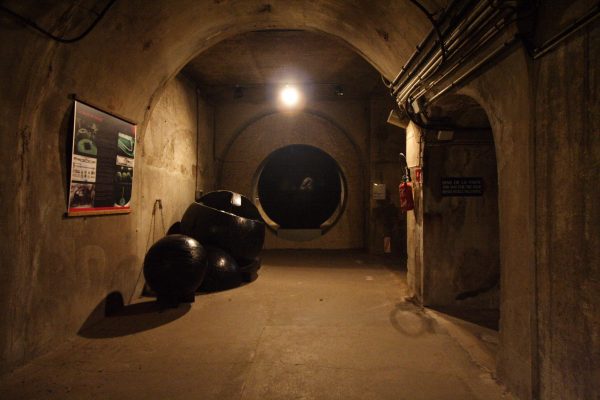
You may not believe it, but a sewer museum, in a real sewer, truly exists! However, it will not be featured in any fear-factor challenges as it, mercifully, does not involve any swimming in the Parisians’ waste. Nonetheless, Paris’s sewers carry wastewater and rainwater, while separate drinking-water and non-drinking-water pipes also run through the underground galleries. It is actually really interesting and widely considered as one of the most unusual museums in the world.
The sewer system of Paris developed over centuries, with a major transformation in the 19th century, and has long been part of the life and history of Paris. This museum is located in the sewers under Quai d’Orsay. It is a must-see destination for Victor Hugo fanatics and/or anyone enthusiastic about engineering, public works and, indeed, history.
Address: Quai d’Orsay, Pont de l’Alma 7th arr
Opening hours: Tuesday to Sunday (10 A.M. – 5 P.M.; last entry at 4 P.M.)
9. Musée d’Art Moderne de la Ville de Paris
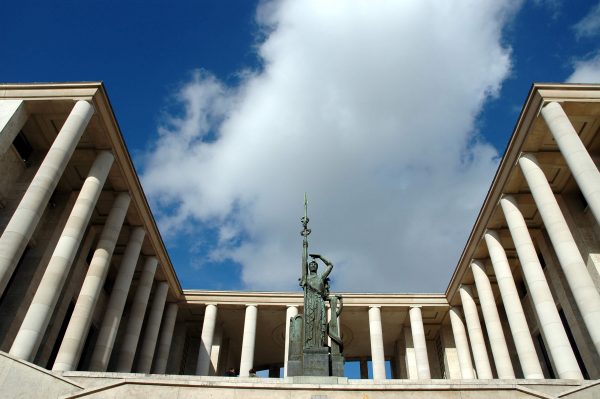
If you are tired of strolling around the echoes of the past and you want something more modern, why not go to Musée d’Art Moderne de la Ville de Paris? Thanks in part to the generosity of collectors and donors, the permanent collection represents many artistic movements of the 20th and 21st centuries through modern and contemporary art.
From Cubism to Fauvism and the New Realism movements, the museum ensures that the philosophies behind them will be passed down to future generations. Some of the most famous works inside are by Modigliani, Braque, Soutine, Dufy and, notably, Henri Matisse, two of whose works can be found inside.
Main attraction: Works by Yves Klein, Figurative arts, Fauvism, etc…
Address : 11, avenue du Président Wilson
Opening hours: T to Su (10 A.M. – 6 P.M.) Late opening on Thursdays until 9:30 P.M. (temporary exhibitions only).
10. Musée National du Moyen Âge / Musée Cluny
History is not complete without the inclusion of the seminal medieval period. This is the reason why the Musée National du Moyen Âge has offered its Gothic architecture to house the magnificent art and memorabilia of this important era. The museum is formed within two prestigious buildings in the heart of Paris: the Thermes Gallo-Romains de Lutèce and the Hôtel des Abbés de Cluny.
The Museum also provides access to a large collection of art from across Europe and the Mediterranean, including the British Isles, which only adds to the colourful and diverse collection of paintings, tapestries, stained glass, silver and ivory pieces. The Medieval period-inspired garden adds to the wonder and vision of the place.
Main attractions: The Lady and the Unicorn, Eros Riding a Dolphin, Visigoth Votive Crowns, Ivory statue of Madonna and Child
Visitor entrance: 28 rue du Sommerard, 75005 Paris, France
Opening hours: every day except Monday (check the official website for current hours)
11. Musée des Arts et Métiers
For science lovers, this enchanting museum will certainly catch your interest. Among its treasures are historic Foucault pendulum spheres and a working demonstration pendulum, a model of the Statue of Liberty by Auguste Bartholdi, some of the first planes, Blaise Pascal’s Pascaline (one of the first mechanical calculators), and even some early automobiles.
Musée des Arts et Métiers was founded to celebrate science and its noble pursuit. In general, the museum is divided into seven different collections: Scientific Instruments, Materials, Energy, Mechanics, Construction, Communication, and Transportation. You will feel like you’ve gone back in time exploring the history of science and the pioneering designs which were the foundation of the sophisticated technology we now enjoy.
Address: 60 Rue Réaumur, 75003 Paris, France
Opening hours: Tuesday to Sunday (10 A.M. – 6 P.M.); Friday until 9 P.M.
12. Musée de l’Armée
Le musée de l’Armée earns plenty of recommendations, as it represents the military institutions of France. It was created in 1905 with the merging of the Musée d’Artillerie and the Musée Historique de l’Armée. Today, it keeps artifacts of war such as weapons, armour, artillery, uniforms, emblems, and paintings. Its collections cover military history from ancient times to the present, including the two World Wars.
Address: 129 Rue de Grenelle, 75007 Paris, France
Opening hours: every day (10 A.M. – 6 P.M.); until 10 P.M. on the first Friday of the month
13. Musée du Vin (Paris Wine Museum)
France is known throughout the world for its love for wine and winemaking. So, if you are a true connoisseur of wine, or perhaps just a thirsty, curious visitor, you might like to tour the museum dedicated to nothing but wine. The Paris Wine Museum displays tools and objects used in vineyards and winemaking. Your visit can also include a wine tasting.
Address: 5, square Charles Dickens, Rue des Eaux 75016 Paris
Opening hours: Tuesday to Saturday (10 A.M. – 6 P.M.)
14. Musée de la Contrefaçon (Museum of Counterfeiting)
Counterfeiting is nowadays one of the major challenges faced by governments and companies. An association of French manufacturers (UNIFAB) created the Museum of Counterfeiting to help visitors understand and recognise counterfeit products. Real items are placed side by side with their bootleg counterparts to show their major differences and help visitors distinguish genuine items from counterfeits. You will learn how to check for fake and imitation products, as if by second nature.
Address: 16 rue de la Faisanderie, 75016, Paris
Opening hours: Monday to Friday (2 P.M. – 5:30 P.M.; last entry at 5 P.M.)
15. Musée des Arts Forains
What is a funfair for you? Is it a magical, magnificent, and mesmerising place where you will find wonderful performances, fun games and awesome rides? But, how could you describe a funfair or a carnival, and their out-of-this-world acts and performances, in a more detailed and expressive way?
It is well known to us that going to a funfair to watch unusual and mind-boggling acts and performances is the dream of almost every child. This fascination made Jean Paul Favand start collecting unusual objects, games, toys, theatrical props and other lost treasures of funfairs. His rare collection that began in the 1970s is an interesting place to bring your children or grandchildren and experience being transported back to a childhood of playful treasures and memories of the past.
Address: 53 Avenue des Terroirs de France, 75012 Paris, France
Visits: guided tours with advance booking, except during special open events; check the official website.
Don’t forget to look for free admission at the museums mentioned above. It is a good way to save money, treat your family and have a good time together while in Paris. Some museums offer free admission on certain days, such as the first Sunday of the month, while others have permanent collections that are free on opening days, like le Musée d’Art Moderne de la Ville, the Petit Palais and Musée Carnavalet. Opening hours, prices and free-entry rules change often, so always check each museum’s official website before you go.