28 French Castles Straight Out of a Fairy Tale
Step into a fairy tale with some of the most beautiful castles in France sorted by region. Fun trivia about the French castles or chateau included!
On this page
French Castles in PicardyFrench Castles in NormandyFrench Castles in Île-de-FranceFrench Castles in AlsaceFrench Castles in BrittanyFrench Castles in Centre Val de LoireFrench Castles in BurgundyFrench Castles in AquitaineFrench Castles in LimousinFrench Castles in Languedoc-Roussillon Midi-PyrénéesFrench Castles in ProvenceKnights in shining armour, damsels in distress, magic forests, and happily-ever-after spent in splendid castles perched on top of a hill. All these come to mind when we talk about castles.
In France, where there are thousands of castles dotting the entire country, you can star in your very own real-life fairy tale with castles dreamier and more spectacular than even your wildest imagination could conjure.
Today, I’ll try to guide you through some of the best ones that should definitely make it to your travel bucket list.
Picking only 28 among the seemingly endless array of beautiful French châteaux is a hard task. But here it is, presenting to you 28 of the most interesting and awe-inspiring castles that seem to have popped out of your childhood fairy tale books.
Here in this article, I’ve arranged the castles according to their respective locations, combing France from top to bottom – from Picardy in the north to Provence in the south. (Some of the regional names used here predate the regional mergers of 2016.)
Quick note
Please note that the French term château has a wider scope than the English term castle and includes palaces, stately homes, mansions, as well as fortresses. For more clarity in this article, we will use the French definition of château and indulge ourselves in the aesthetic and historical beauty of these listed architectural wonders.
Are you ready to see your dream château?
Here we go.
French Castles in Picardy
1. Château de Chantilly
Located in Chantilly in the Oise department of the Picardy region, this château began as a medieval fortress, was rebuilt in the 16th century and again in the 19th century, and houses the Musée Condé, whose collection of Old Master paintings is second only to the Louvre’s in France.
Did you know?
Brazilian football star Ronaldo Luís Nazário de Lima, known as Ronaldo, held a lavish celebration in this castle in 2005; it reportedly cost around €700,000. Chantilly has also hosted spectacular fireworks events, including the Nuits de Feu and the 2026 Fééries festival at the Hippodrome. Check the current programme before planning a visit around a fireworks show.
2. Château de Pierrefonds
Hold your collective breaths, here’s a true fairy tale gem. On an earlier medieval site, the castle built for Louis, Duke of Orléans, took shape from 1397 into the early 15th century. Château de Pierrefonds is in the Oise department of the Picardy region.
In the 19th century, Napoléon III asked Viollet-le-Duc, the father of modern restoration, to restore it to the point of even surpassing its previous grandeur.
Did you know?
This photogenic fairy tale castle has been a mainstay in television and movies. You might have seen Pierrefonds Castle as the setting in the 1998 Leonardo DiCaprio movie The Man in the Iron Mask as well as in Highlander: the series, The Messenger: The Story of Joan of Arc, and even in the Disney TV show Wizards of Waverly Place as Wiz Tech Academy and Camelot in BBC’s series Merlin.
French Castles in Normandy
3. Mont Saint-Michel
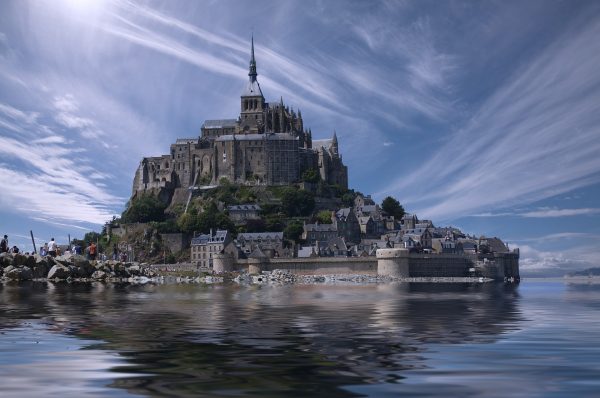
This surreal island commune in Normandy, in the northwestern part of France, is home to an abbey (abbaye). It has been a religious site since the 8th century and was fortified in the Middle Ages.
Mont Saint-Michel is an island whose bay has some of the highest tides in Europe. A causeway built in the 19th century caused silt to build up around it, so the Mont was slowly becoming a part of the mainland. To let it go back to being an island, a project replaced the causeway with a bridge, opened in 2014; the wider project was completed in 2015.
Did you know?
Lord of the Rings fans, heads up! See anything oddly familiar? That’s because the design of the city Minas Tirith in the film The Lord of the Rings: The Return of the King is often said to have been inspired by Mont Saint-Michel. This island commune is also associated with inspiration for writers and musicians; a 2010 European Commission publication links it to French composer Claude Debussy’s La Cathédrale engloutie.
French Castles in Île-de-France
4. Palais de Versailles
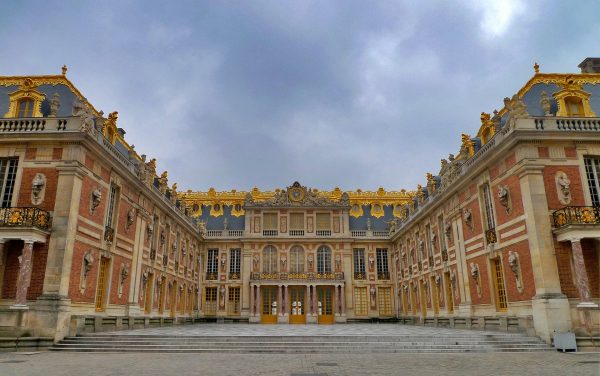
This widely famous royal palace started out as a hunting lodge for Louis XIII in the 17th century but was later converted by Louis XIV into one of the most impressive palatial structures all over the world.
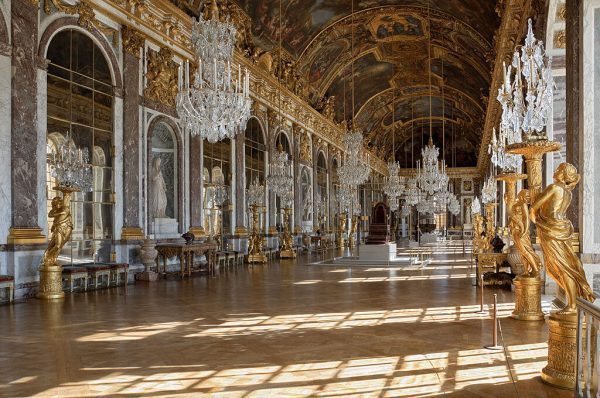
The Hall of Mirrors (Galerie des Glaces) Photo source
Did you know?
The entire palace is fabulously opulent but the most spectacular feature is the Hall of Mirrors. At about 240 feet (73 meters) long, the dazzlingly magnificent gallery boasts 357 mirrors set in 17 arcades. Its splendour advertised royal prestige and the skill of French mirror-makers.
But as Versailles was meant to be the “showcase of France” and all items used had to be manufactured in France, French minister Jean-Baptiste Colbert had to entice mirror artisans from Venice, which at that time held the monopoly on mirror manufacturing.
According to legend, the Venetian government later ordered the assassination of those artisans in order to keep the mirror-making secrets strictly within the Venetian Republic.
5. Château de Vincennes
Imposing? Check. Picturesque? Super check! This royal fortress located in a suburb of Paris began as a hunting lodge for Louis VII in the 12th century, and construction of the fortress began in the 14th century.
Did you know?
Several French kings died at Vincennes, including Louis X, Charles IV and Charles IX.
6. Château de Fontainebleau
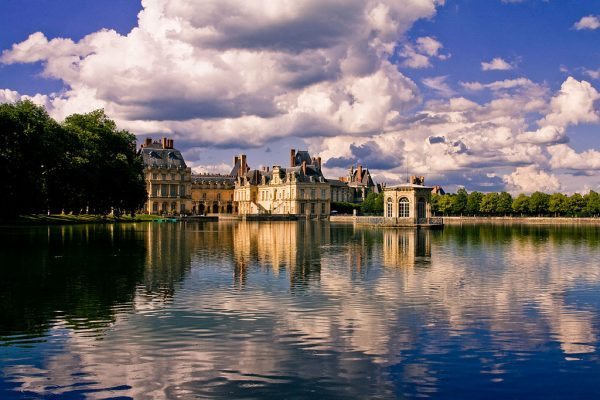
Another famous royal palace that makes it to this list, Château de Fontainebleau is located just 34 miles or 55 kilometers from Paris. It started out as a medieval castle in the 12th century, later became a residence of the monarchs, and today is a national museum and a popular tourist attraction.
Did you know?
This enormous royal palace was home to 34 French monarchs from the 12th to 19th century and has a very long and very rich history. Its name is thought to derive from one of the springs found there, the Fontaine Bliaud which is located near the English garden.
French Castles in Alsace
7. Château de Fleckenstein
Feast your eyes on this man-made marvel in a backdrop of nature’s best views in the mountains of Alsace.
This 12th century castle by the Fleckenstein family stands on a sandstone ridge right next to the French frontier with Germany and may be accessed by road or using the hiking paths.
Did you know?
The chateau was destroyed in 1680 by the armies of Louis XIV. The castle has since been partly restored.
8. Château du Haut-Kœnigsbourg
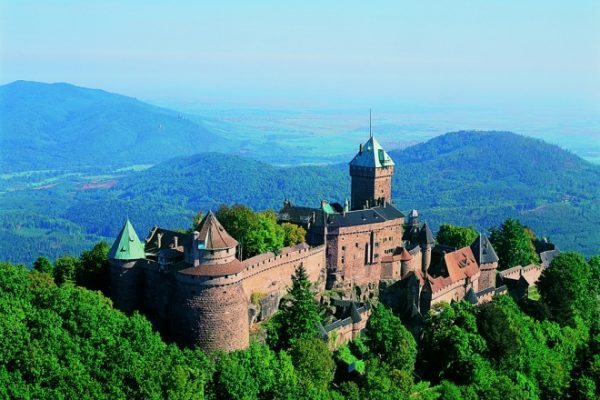
You like more dreamy views? Here’s more. This medieval castle was built sometime in the 12th century and is first mentioned in 1147, when it belonged to the Hohenstaufen family.
It passed through various hands from the Middle Ages, was rebuilt by German Emperor Wilhelm II in the early 1900s, and later on turned over to the French state after World War 1.
Did you know?
Château du Haut-Kœnigsbourg is situated 757 meters above sea level and looks down over the Alsace plains, the Black Forest, and even the Swiss Alps on some days.
French Castles in Brittany
9. Château de Pontivy
The Pontivy castle, built in the late 15th century in Morbihan, is an imposing medieval castle also called the Castle of the Dukes of Rohan, or the Chateau des Rohan. Restoration work is ongoing, so check the current guided-visit programme before going.
Did you know?
According to tradition, the name Pontivy comes from Pont d’Ivy because a monk named Ivy, who came from Britain, built a bridge nearby and is credited as the town’s founder.
10. Château de Suscinio
More eye candy for you! Built in the 13th to the 14th century in Sarzeau commune in the Morbihan department, near the Atlantic ocean and right beside a forest, this castle began as a hunting lodge for the Dukes of Brittany and later on became their favorite residence.
The summer son et lumière is a must-visit. Check the current July and August programme and book ahead, as places are limited.
Did you know?
Henry Tudor (who became Henry VII of England) spent part of his exile in Brittany, from 1471 to 1484, in the Château de Suscinio during the English Wars of the Roses.
11. Château de Vitré
Nothing like a medieval castle to make you feel like a princess or arouse that knightly spirit in you. This imposing fortress served the purpose of warding off the English during the Hundred Years War. Today it houses the town hall and a museum.
French Castles in Centre Val de Loire
The Loire Valley is studded with hundreds of majestic and diverse châteaux, each with rich histories tied to the kings of France.
12. Château de Chambord
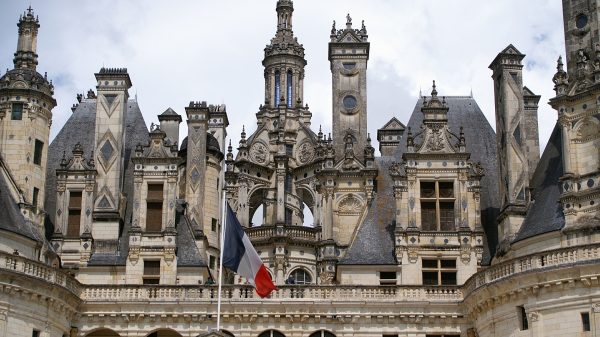
Considered the biggest château in the Loire, this outstanding example of French Renaissance architecture was built in the 16th century as a hunting lodge for Francis I. This massive royal château has about 430 rooms, 282 fireplaces, 77 staircases and a park of roughly 13,000 acres.
Did you know?
If this castle seems eerily familiar to you, it is probably because it was the inspiration for the Beast’s castle in the animated Disney film Beauty and the Beast (1991).
The 2017 live-action Beauty and the Beast film also based some of the castle’s design on both Château de Chambord and the Palace of Versailles.
If you’re a gamer, you might also have spotted it in popular video games.
13. Château de Chaumont
This castle, founded in the 10th century, is also called Château de Chaumont-sur-Loire due to its location in Chaumont-sur-Loire in the Loir-et-Cher department.
The name Chaumont comes from the French words chauve mont, which translates as “bald hill” referring to the place it is built on.
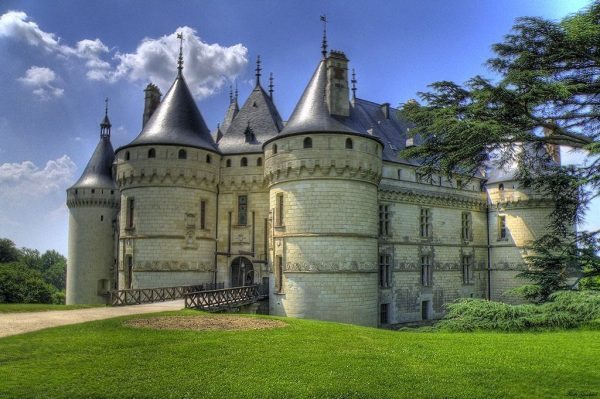
Whoa, gorgeous. Photo source
Did you know?
After the death of King Henry II, his widow Catherine de Medici forced his mistress Diane de Poitiers to give up Chenonceau in exchange for Chaumont. Today the castle hosts an international garden festival every year.
14. Château de Chenonceau
I can almost hear your sighs from here. Dreamy, isn’t it? With a medieval predecessor on the estate, the chateau that we know today took shape in the 16th century and is among France’s best-known chateaux.
Combining late Gothic and early Renaissance architecture, the beautiful chateau arches over the River Cher with renowned women such as Diane de Poitiers and Catherine de Medici designing additions to the castle.
Did you know?
When King Henry II offered the chateau to his mistress Diane de Poitiers, she commissioned the bridge to be built, connecting the chateau to the opposite bank. When Henry II died and his wife Catherine de Medici took over the place, she added a two-story gallery atop the bridge.
But did you know that this beautiful bridge is also the reason that the chateau was not destroyed during the French Revolution? The owners were able to convince the Revolutionary Guard that the bridge is essential for commerce and travel, being the only bridge for miles, so the place was spared.
15. Château de Chinon
This massive chateau that dominates the Chinon commune stands on a site with ancient origins and was substantially expanded in the 12th century above the river Vienne.
It is known as the castle where Joan of Arc met Charles VII in 1429, before his coronation, to seek his support for her mission to save France.
Did you know?
The Chateau at one point in its history became the prison for the leaders of the order of the Knights Templar, including Jacques de Molay. Graffiti traditionally attributed to the imprisoned knights may still be seen on the walls of the Tour du Coudray, where they were held. The markings come from different periods, so not all can be securely assigned to the Templars.
16. Château d’Ussé
The fortifications of this castle were first built in the 11th century but it was in the 15th century when it was rebuilt to add Renaissance features into the design. The result is a classic fairy tale castle that overlooks the Indre valley.
Did you know?
Sitting on the edge of the Chinon forest that could very well double as a magical forest, this castle is often known as The Sleeping Beauty castle because it is said to be the castle that French author Charles Perrault had in mind when he wrote the Sleeping Beauty story.
17. Château de Sully-sur-Loire
An imposing medieval fortress built in the 14th century, this castle was later on transformed into a residential chateau by the Duke of Sully. It has hosted concerts for the Festival de Sully et du Loiret, whose programme includes several musical genres. Check the festival’s current dates and status before planning a visit around it.
Did you know?
Famous philosopher François-Marie Arouet better known as Voltaire sought shelter here in Château de Sully-sur-Loire during his exile from Paris.
18. Château d’Angers
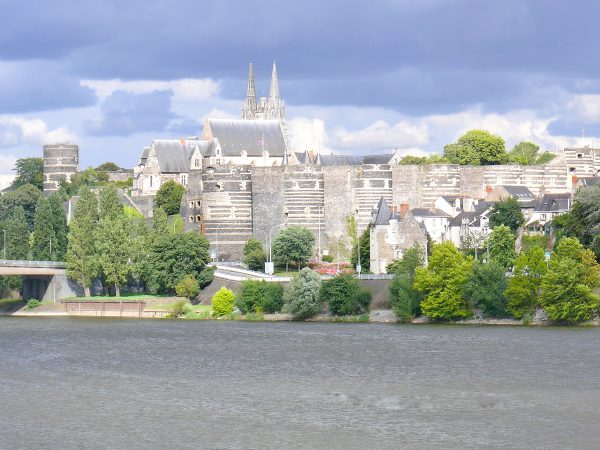
Castle Of Angers
In the city of Angers near the river Maine, this castle was first founded in the 9th century by the Counts of Anjou but its current colossal size was added sometime in the 13th century.
Did you know?
Today, the castle has been converted to a museum which is home to the Apocalypse Tapestry, the largest surviving medieval tapestry ensemble in the world, which illustrates in vivid detail the Bible’s Book of Revelation.
French Castles in Burgundy
19. Château de Châteauneuf
This powerful (not to mention pleasing to the eyes) medieval fortress was founded in the 12th century and extensively transformed in the 15th century. It stands in the Côte-d’Or department, overlooking the Burgundy Canal.
Did you know?
Also known as Château Châteauneuf-en-Auxois, according to local legend, the last heir of the Châteauneufs met her death by being burned alive as punishment for poisoning her husband. Yikes.
French Castles in Aquitaine
20. Château de Beynac
Can you imagine how intimidating this must have looked to invaders back in the day? Beynac castle, an imposing medieval fortress built in the 12th century, sits on a limestone cliff about 150 meters above the Dordogne River, facing its rival castle Castelnaud.
Did you know?
This castle is where some scenes from the movie ‘The Visitors II: The Corridors of Time’ (Les Visiteurs 2) were filmed as well as Luc Besson’s ‘Joan of Arc’ (Jeanne d’Arc).
21. Château de Bonaguil
The name Bonaguil is said to come from bonne aiguille, which means good needle, after the steep rocky peak where the defensive castle is perched.
With origins in the 13th century, this interesting chateau was extensively fortified in the late 15th and early 16th centuries, during the transition from the medieval period to the Renaissance. The Bonaguil-Fumel festival offers theatre and other performing arts; check its current programme if you’re in the area.
Did you know?
This castle was further fortified with additional defences at the end of the Middle Ages, equipping it with the latest armaments tech. But those add-ons immediately became obsolete as soon as it was completed. And the castle was never attacked.
22. Château de Roquetaillade
Roquetaillade, which means carved out of rock due to the rock formations in the caves below the castle, has been privately owned and occupied by the same family since it was built in Gironde in 1306!
23. Château de Castelnaud-la-Chapelle
Another picturesque castle overlooking the Dordogne river, this medieval fortress in Périgord was built in the 13th century and is now a popular castle to visit in the South of France.
Did you know?
During the Hundred Years War, Castelnaud-la-Chapelle Castle changed hands between the French and English many times! Today it houses an impressive museum of medieval warfare including a showcase of full-sized medieval war machines, trebuchets, mangonels, and other weapons.
French Castles in Limousin
24. Château de Montbrun
If you wish to see a fine example of a 15th century medieval castle with moat, high walls, and battlements complete with machicolations, this is a good castle to drop into. Initially built in the 12th century and then reinforced in the 15th, you’ll definitely feel like you’re in the Game of Thrones’ land of Westeros instead of a fairy tale story.
Did you know?
There are lots of legends and mysteries surrounding this chateau, one of which is the Lady in Blue, a ghost which is said to be wandering around the castle.
25. Château de Rochechouart
Feeling castle fatigue yet? Here’s another one to feast your eyes on. With surviving 13th-century parts and major later medieval and Renaissance additions, this chateau is located in the Haute-Vienne department in Limousin.
Did you know?
Rochechouart, the town where this castle is located, calls itself the “Countryside of the Meteorite” because around 200 million years ago, a giant meteorite (one of the largest known impacts in Europe) smashed into this place.
French Castles in Languedoc-Roussillon Midi-Pyrénées
26. Cité de Carcassonne
This fortified city in Aude in the Languedoc-Roussillon region has ancient origins and impressive medieval defences. It can be considered a proper medieval citadel with its 52 towers and 3 kilometers of double walls surrounding it.
In its 2,500 years of colourful history, the town has witnessed the comings and goings of various military groups such as Romans, Visigoths, Saracens, as well as the Crusaders.
Did you know?
In the 17th century, when France annexed Roussillon and the border moved south, Carcassonne no longer needed to serve its previous military purposes. By the mid-19th century, the fortified city had fallen into disrepair and was threatened with destruction.
Thankfully, the efforts of the scholar Jean-Pierre Cros-Mayrevieille and the inspector of historic monuments Prosper Mérimée helped secure its restoration, with the lengthy work undertaken by the famous Viollet-le-Duc and continued by others.
27. Château de Castelnau-Bretenoux
This 12th century castle in Prudhomat, Lot department in the Midi-Pyrénées stands on a rocky promontory in the “land of four rivers”, overlooking the valleys of the Dordogne, Bave, Cère and Mamoul. It is characterized by its red stone walls that are recognizable even at a distance.
It was the dream castle of 19th century opera singer and collector Jean Mouliérat, who purchased and restored the castle and furnished it with an eclectic mix of historic furnishings that may still be viewed today.
French Castles in Provence
28. Palais des Papes
Last but a far cry from being the least on this list is the historical Popes’ Palace in Avignon. As the seat of Western Christianity in the 14th century, this papal residence hosted several papal conclaves in its walls.
Today, it is a major tourist attraction and cultural venue, hosting events such as the Festival d’Avignon. It has also hosted the Luminessences d’Avignon, a light show that tells a story—rather like the famous Fête des Lumières in Lyon. Check the current programme, as past shows and dates should not be assumed to recur every year.
Conclusion
Travelling to see these castles soon?