30 Favorite French Words (Chosen by Our Community)
30 favorite French words chosen by the Talk in French community, with meanings and examples.
On this page
1. Attrayant2. Aujourd’hui3. Autrefois4. Bouleversant(e)5. Caoutchouc6. Cauchemar7. Chartreuse8. Chatouillement9. Chouchouter10. Épanouissement11. Époustouflant12. Gribouillage13. Inoubliable14. Je voudrais15. L’ananas16. le train-train quotidien17. Libellule18. Malheureusement19. Pain au chocolat20. Pamplemousse21. Pantoufle22. Papillon23. Parapluie24. Phoque25. Raison d’être26. Raplapla27. Je rigole28. Toujours29. Tu me manques30. YaourtDo you have a favorite French word?
I’m pretty sure you do. So I asked the Talk in French community on Facebook what theirs is and the list I got was interesting.
Some are truly gorgeous words, others quite thought-provoking while some are just amusing and a bit odd. Today, we’ll take a look at the second part of the list.
Ready? Here we go.
1. Attrayant
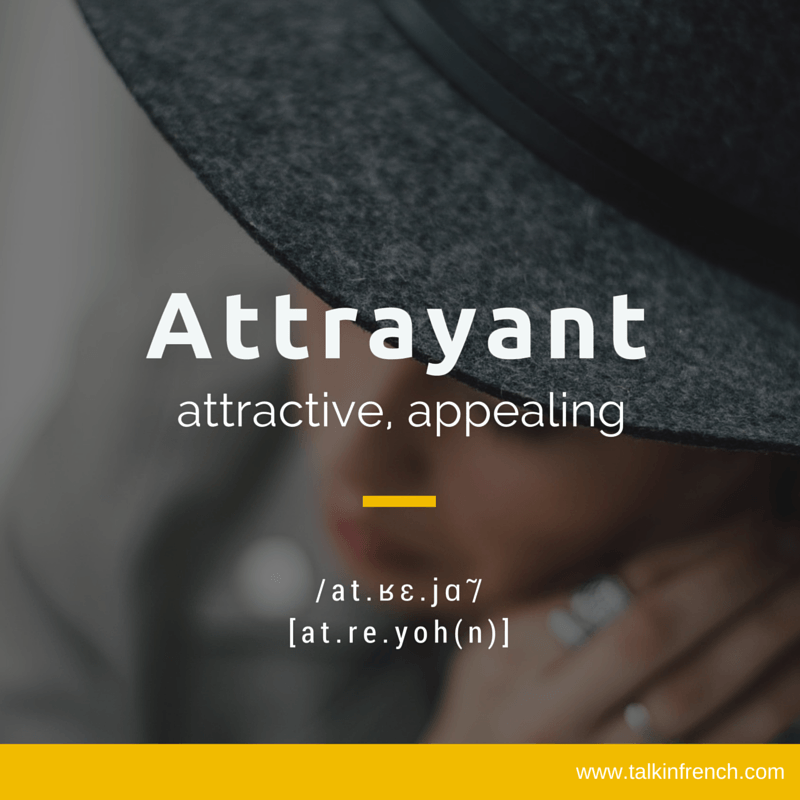
What is it about this word that attracts interest? Because the word itself means attractive! Ha! Attrayant is an adjective that oozes a positive meaning: attractive, inviting, enticing, or appealing. No wonder it attracted enough people who said this is their favorite word, eh?
2. Aujourd’hui
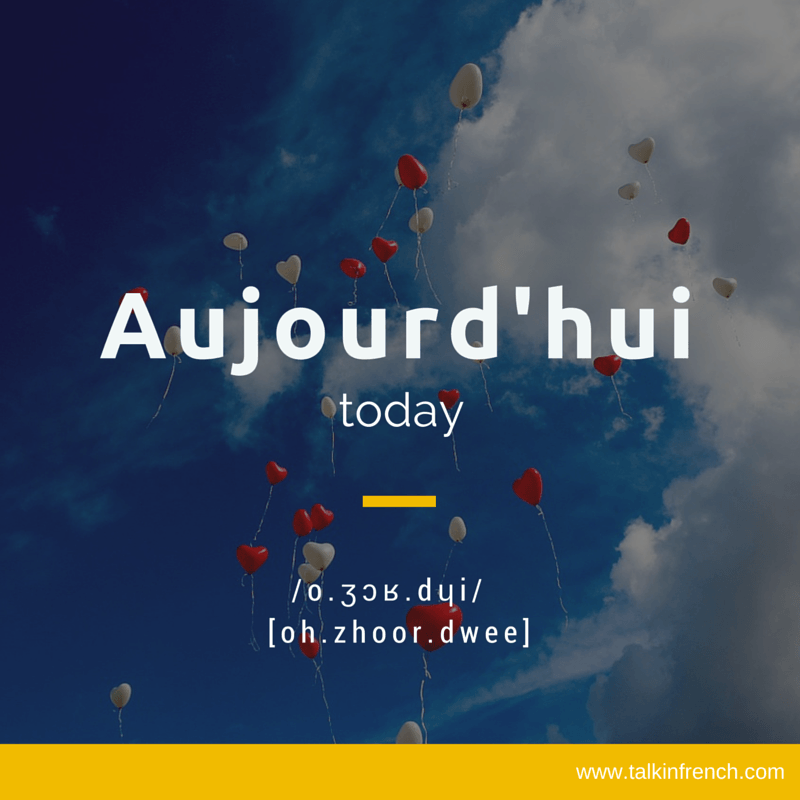
This term which is widely used to mean ‘today’, is actually a redundant term when you think about it. Hui is an old term which means “today”, so when you add au jour de, you’ll get a phrase that literally means “on the day of today”. Fascinating, huh? It does have a nice hopeful ring to it, too!
3. Autrefois
Autrefois is an adverb that has several counterparts in English, such as “in the past, previously, (back) in the old days, formerly, erstwhile, once, or even once upon a time”. It’s one of those words that can be quite useful, whether you’re an aging millennial who is wistfully reminiscing the good old 1990s or an octogenarian sharing your war stories with your great-grandkids.
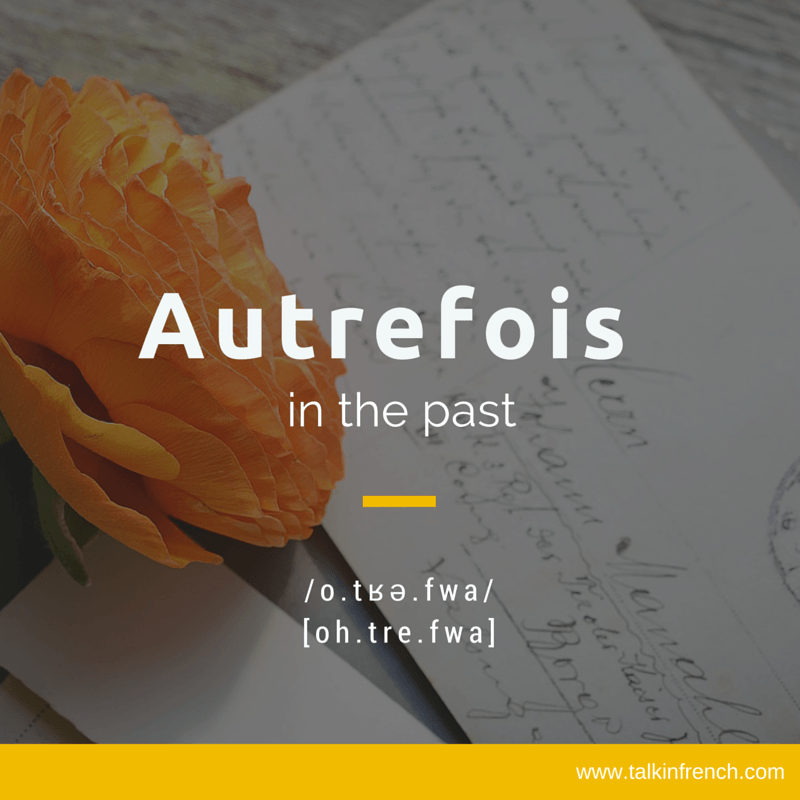
For example, when lamenting this generation’s awful antics, you can wail in nostalgia and say,
“Cela n’arrivait pas aussi souvent autrefois.” (This didn’t happen as often in the past.)
4. Bouleversant(e)
This gut-wrenchingly beautiful adjective means ‘deeply moving, distressing, or overwhelming’. Another related word that made it to this list of submissions is bouleversé, an adjective that means ‘stricken, upset, shaken, shattered’.
5. Caoutchouc
This word which means “rubber; both the natural and synthetic kind,” appears in a lot of lists including the ones that students find hardest to pronounce.
But what’s interesting is that despite being so different from its English counterpart, this word is actually similar to a lot of other languages’ word for rubber. Such as kautschuk (German), cautxú (Catalan), καουτσούκ (Greek), cauciuc (Romanian), каучук (Russian), caucho (Spanish), cao su (Vietnamese), kauçuk (Turkish), and kawotchou (Haitian Creole). These related words have South American Indigenous origins; the exact source language is debated, with Quechua among the proposed origins.
6. Cauchemar
You’d think that this lovely word would mean something just as lovely, too. Well, not so much. Cauchemar is the French word for “nightmare”. If you scrutinize the term even further, it becomes creepier.
Cauche comes from an old French verb “cauchier” which means to press or tread on, and “mar” originated from another old term that means “succubus or a malicious female spirit”. Cauchemar, therefore, is likened to the kind of nightmare where people experience a weird, realistic sensation of being helplessly pressed down by a malicious spirit. Feeling creeped out yet?
7. Chartreuse
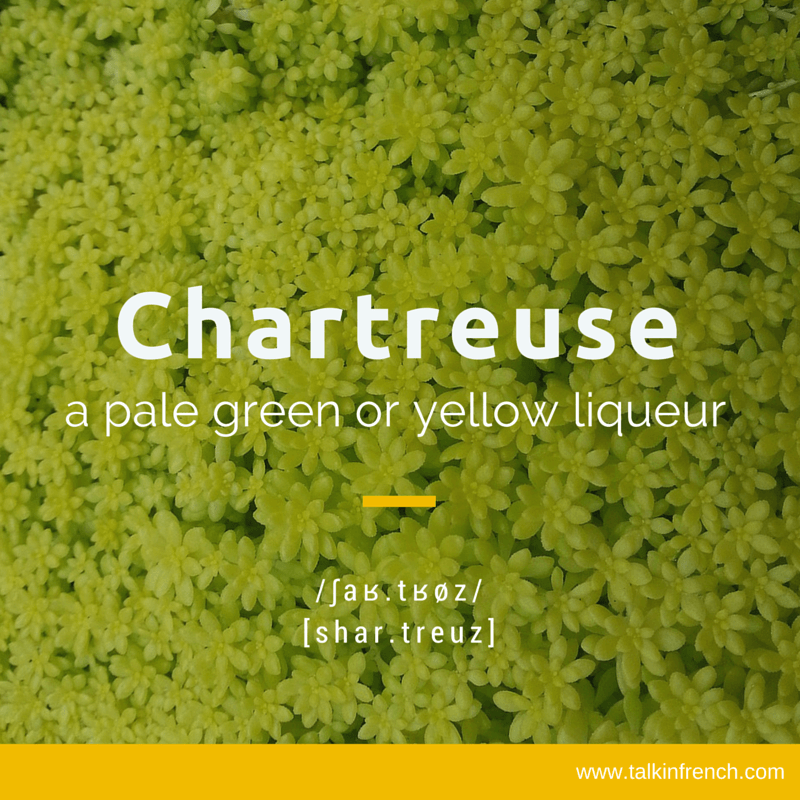
Chartreuse is the name of a pale green or yellow-coloured herbal liqueur made by the Carthusian monks of La Grande Chartreuse monastery in the Chartreuse Mountains near Grenoble. The yellowish pale green colour of the liqueur is also the basis for the colour chartreuse.
8. Chatouillement
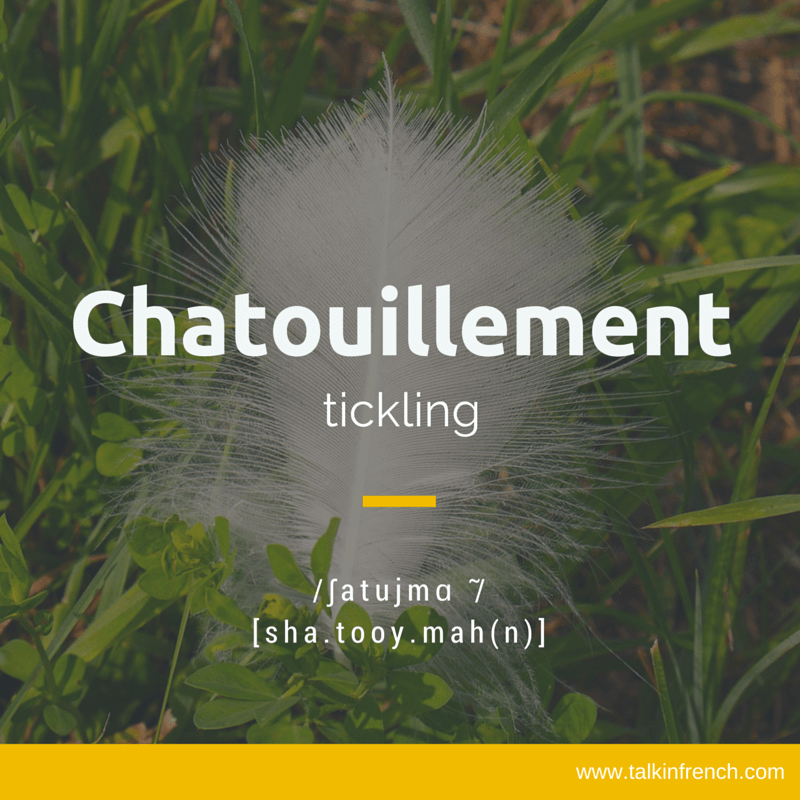
Even just saying the word gives you visions of a little tickling sensation, doesn’t it? The word is, after all, the French term for ‘tickling’ or that tingling feeling.
9. Chouchouter
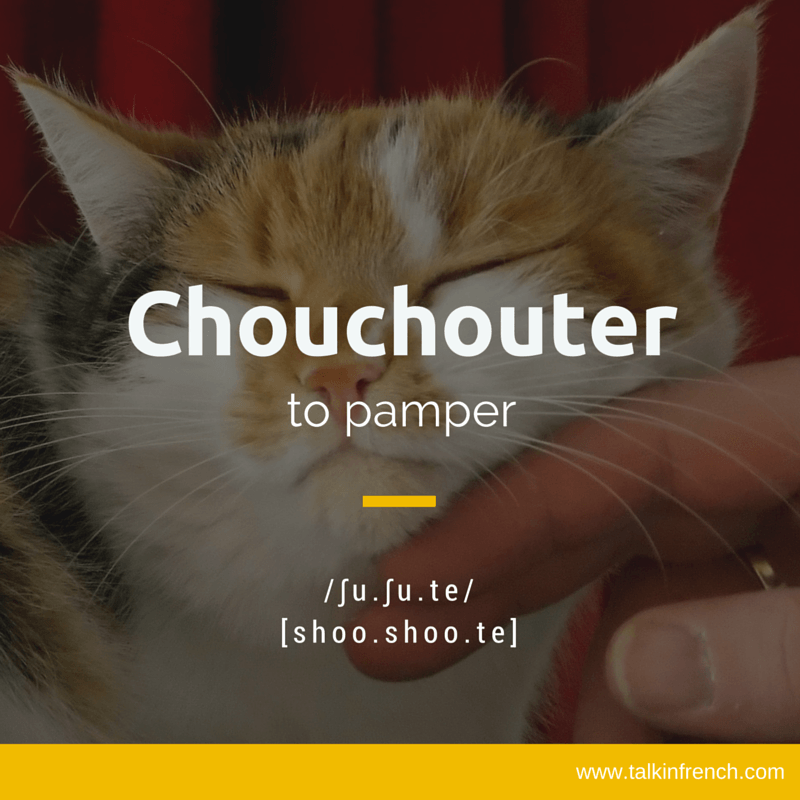
Perhaps this word became a crowd favorite because of the truly French flavor of its sound. Shoo.shoo.tay. The word just rolls off the tongue pretty nicely, huh.
This verb means to pamper, coddle or spoil someone. It basically refers to the act of giving a person special treatment or treating him or her with excessive affection. A related term is chouchou which is a term of endearment. Read more in one of my other articles.
But wait! Don’t confuse this with the word chuchoter, a verb that means ‘to whisper’.
10. Épanouissement
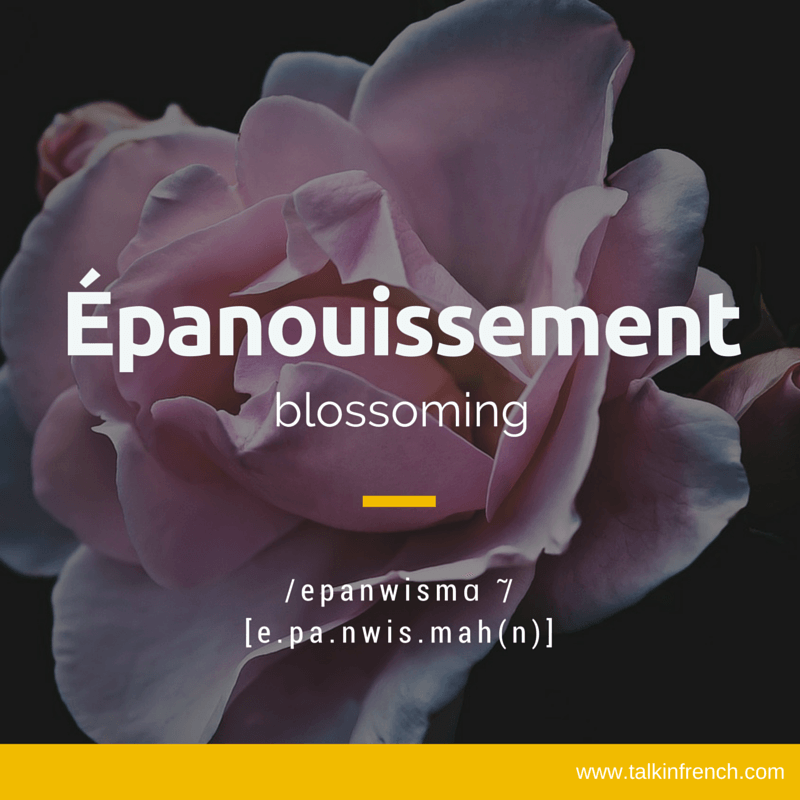
Another crowd favorite is the word épanouissement which is French for ‘blossoming’ or ‘blooming’. Much like its English counterpart, this word has both a literal usage (e.g. in flowering plants) and an even deeper, more profound metaphorical meaning.
Épanouissement could also be used to mean the development or changes happening in a person—whether physically, socially, emotionally, or intellectually. On a much bigger scale, it can mean growth, the act of flourishing, or reaching one’s full potential, in both individuals and society in general.
But regardless of which way you take its meaning, it does have a nice ring to it, don’t you think?
11. Époustouflant
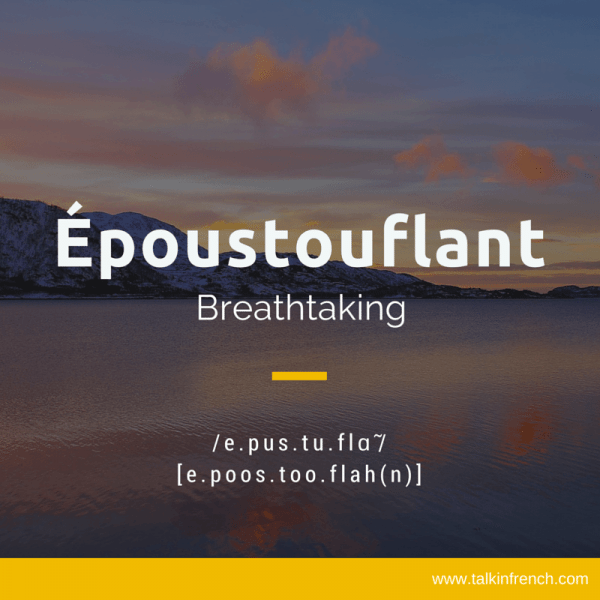
Époustouflant(e) doesn’t just describe an amazing moment or scene, it is a breathtaking word in itself, too! Other counterparts: stunning, astonishing, mind-blowing.
12. Gribouillage
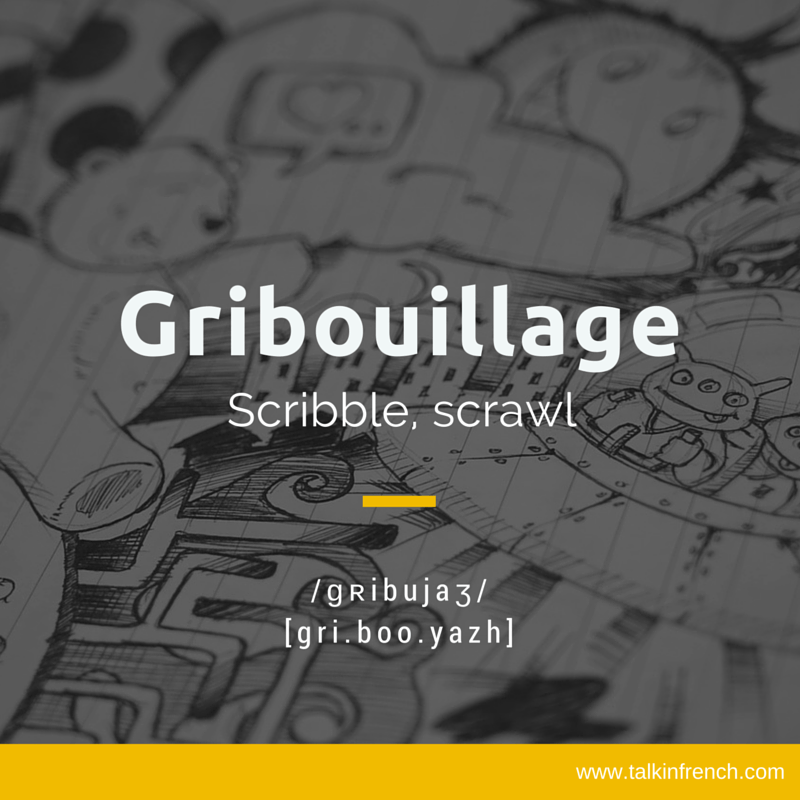
In English, it’s called doodle, scribble, or scrawl. It’s a bunch of hastily drawn or written words or drawings which are often quirky and shapeless. In French, the counterpart word is much longer and sounds more intimidating: gribouillage.
13. Inoubliable
A gorgeous and unforgettable word that means exactly what it sounds like: inoubliable. This one has been included in many other lists of gorgeous French words before, for its meaning, its sound, and the way it rolls off the tongue: unforgettable, indeed!
14. Je voudrais
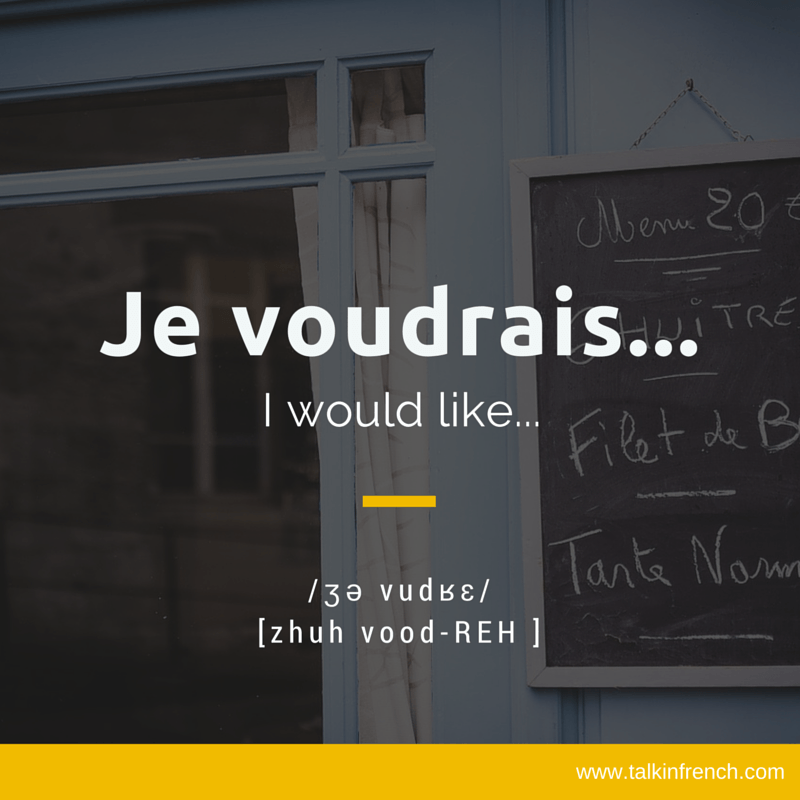
This is actually a phrase, not a term, but I’ve selected it to include on the list mostly because of its usefulness. These two words are quite helpful especially if you’re traveling to a French-speaking destination and you only have a few French words in your arsenal.
‘Je voudrais…’ translates to ‘I would like…’, and you can use it to point out whatever it is you would like to have, to be, or to do:
je voudrais un café = I would like a coffee.
Je voudrais un croissant = I would like a croissant.
Je voudrais ceci. = I would like this.
je voudrais remercier… = I would like to thank…
je voudrais être… = I would like to be…
Je voudrais faire quelque chose = I would like to do something.
And so much more.
15. L’ananas
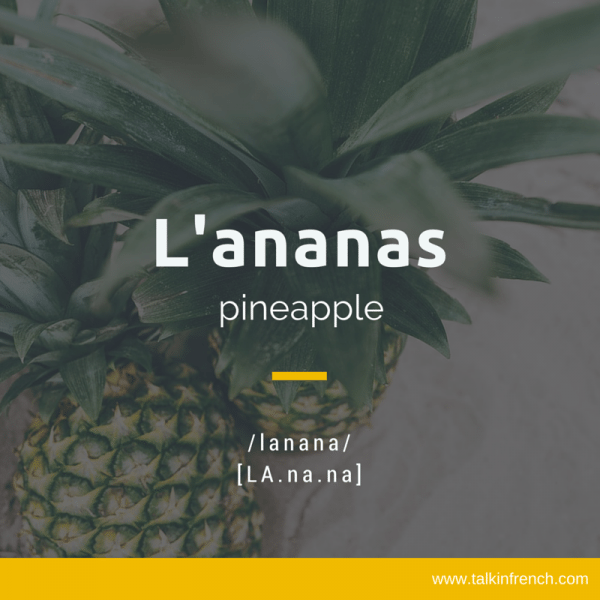
The final one in this list is l’ananas (pineapple). I’m glad that this one was submitted by some Talk in French readers because I quite like this word. French speakers do not all pronounce this word the same way: some say la-na-nas while others leave the s off and simply say la-na-na. Both are accepted, but the traditional pronunciation has no s sound at the end (and that is the norm in Quebec).
How about you? What’s your favorite French word, and did it make it on this list?
16. le train-train quotidien

Le train-train quotidien may seem like an intimidating expression that involves trains, but it has nothing to do with it actually. This expression is all about the daily grind. The same old, boring day-to-day routine. The waking up in the morning, going to work, coming home, going to sleep…and waking up to do it all over again. That kind of boring day-to-day.
Paints a bleak picture but quite a fun word to add to your vocabulary, don’t you think?
17. Libellule

Libellule is a dragonfly. And for one reason or another, this word is a favorite of many French learners. Could be because of its distinct sound and how you have to wrap your mouth around the letters to form the word. Plus, of course, dragonflies are quite lovely creatures, too.
18. Malheureusement

There are a lot of unfortunate instances that life throws our way, and for those moments, there’s this word to help you out. It might not be a very perfect scenario, but hey, at least the word you’ll be using sounds divine.
19. Pain au chocolat

So… I’m going to take a stab here and guess that this word is well-loved by learners because it conjures enticingly warm and soft, velvety sweet images and memories. I couldn’t blame them. Pain au chocolat. Miam miam.
What’s interesting though is that this pastry is not called pain au chocolat in other parts of France. In south-west France, this is called chocolatine. Elsewhere you may also hear petit pain au chocolat or croissant au chocolat. What do you call it where you are?
20. Pamplemousse

This sweet little word evokes thoughts of warm, plump sunshine and never fails to make some French learners smile.
21. Pantoufle

This harmless little word which means the lowly slipper is widely liked for a simple reason: it sounds good and feels great to say over and over.
22. Papillon

A real crowd pleaser, this one. A beautiful word to go with a beautiful creature. Makes you quite glad that it’s not literally translated from English, don’t you think? Une mouche de beurre wouldn’t have made this list at all.
23. Parapluie

The way the r rolls in your mouth as you say the word plus the pluie towards the end—this is such a fun word to say. Add to that the literal translation of the word which is basically ‘protection against rain’. Wonderful, isn’t it?
24. Phoque

English speakers have so much fun with this word because of what it sounds like. Except the French word phoque is not a fancy way to say the f-word, it’s just a harmless little seal.
But even better is: ouate de phoque (seal wadding) which is not French for WTF but a fun term nonetheless.
25. Raison d’être

Profound, touching, and tugs at your heartstrings. That’s what this term does, for sure. So, who or what is your raison d’être?
26. Raplapla

There’s normal tired…and then there’s raplapla kind of tired. This word also made it to this list of the weirdest French words!
27. Je rigole

Do you like to joke or tease people? This one will definitely come in handy. Je rigole ! is what you say after you’ve muttered a joke, an insult, or some #realtalk truth bombs that weren’t well received.
Je rigole literally means ‘I laugh’ but it’s the equivalent of ‘I’m joking!’ or ‘I’m kidding!’ Said something that drew a frown? Follow it up with “Je rigole !” Always works!
28. Toujours

Toujours is not just a beautiful and heartfelt word, it is also quite useful and appears in a lot of colloquial expressions and proverbs.
Some of its most romantic uses:
Je t’aimerai pour toujours. I will always love you.
Je pense toujours à toi. I always think of you.
Je veux être avec toi pour toujours. I want to be with you forever.
À toi, pour toujours. Yours forever.
Feeling romantic yet? Here are some more romantic French words for you.
29. Tu me manques

Tu me manques means “I miss you”, but what makes it very interesting is the usage of the verb manquer. Manquer means “to miss” but it follows a weird construction—the person being missed is the one who is the subject of the sentence. So instead of focusing on the speaker, the whole attention is lavished on the person being missed.
Confusing? Think of it this way: instead of saying I miss you, the subject is switched and it becomes “you are being missed by me”. Sweet and infinitely more touching, huh?
30. Yaourt

Finally, we’re at the last on our list. Yaourt is the simple counterpart of yoghurt. But that’s not all there is to it. It’s also the basis for a really funny expression chanter en yaourt which is the funny singing you do when you don’t know the lyrics and just use made-up words instead.